The Plaza
An extract from the book. The afternoon I walked my children to the plaza in the rain, and we waited two hours for a phone call.
Versión en español: La plaza
This is an extract from the book I am writing about our years in Mexico. It takes place on the afternoon my husband pointed a gun at me in front of our children.
The children were waiting on the road outside the front door. I reached them and pulled them in close, and we started walking towards town.
We had walked that road many times. Usually it took a while. One of the boys would stop to point something out. My daughter would stop to pick up a stone.
Not that afternoon. This time we were walking towards safety.
We walked fast. Nobody spoke. Nobody asked where we were going. The gravel crunched under our shoes. A cold wind came across the road, and a light rain had started. All I wanted was to reach the plaza, and to put some distance between us and the house.
The streets were empty. It was not a time to be outdoors. I don't remember hearing anything. A couple of cars passed. Somewhere a television might have been on. My mind was too busy to notice.
I don't remember their faces in those minutes. I have tried, and I can't bring them back. What I have is the road, and the rain, and needing to get them somewhere safe.
* * *
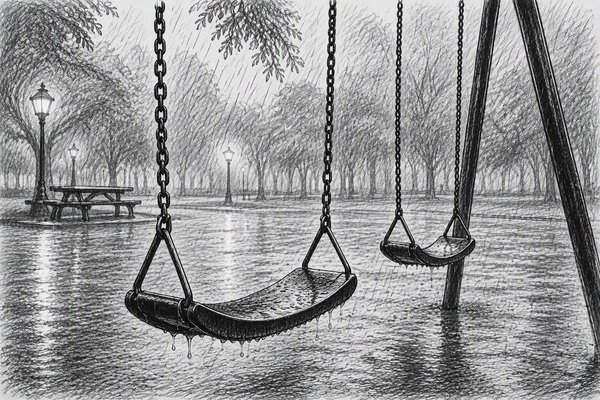
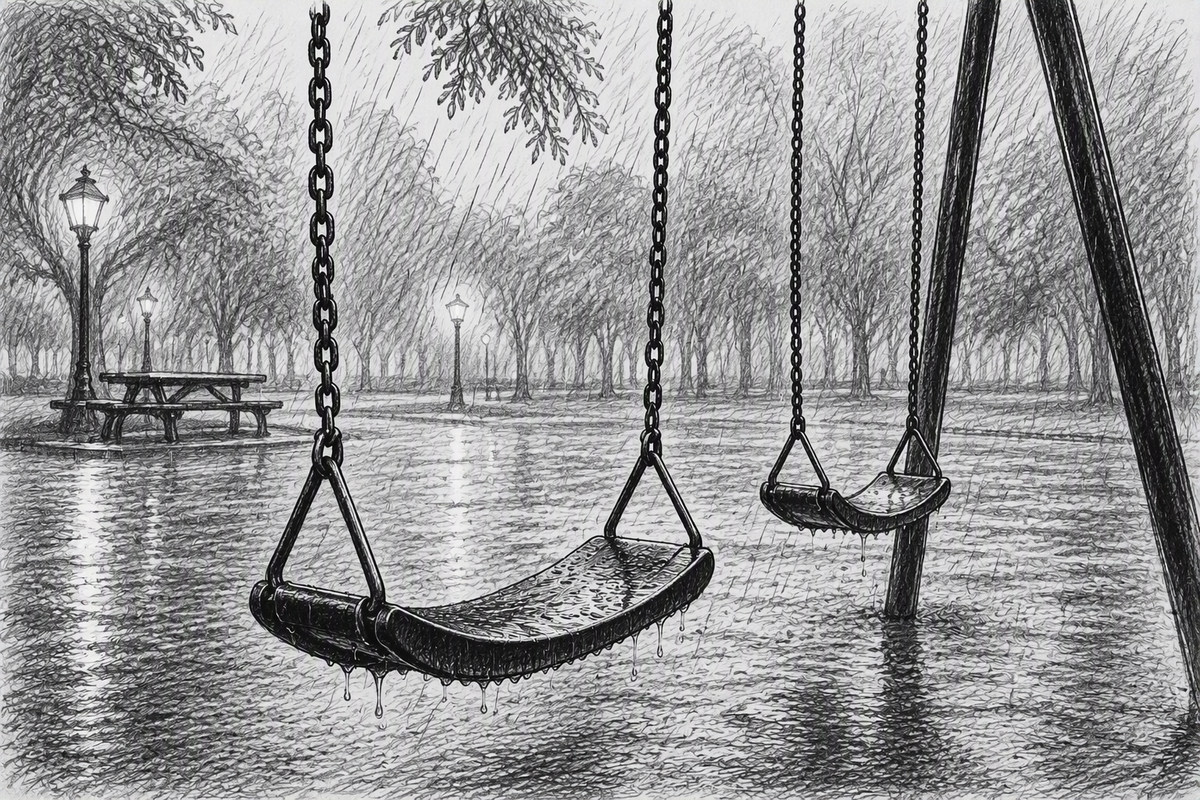
The plaza was empty too. The gardens, the swings, the benches under the jacaranda trees, and no one in any of it. No families, no neighbours, no children on bikes.
But it was still our safe place. It was the only place in the whole town where I felt my children were safe, and it did not matter whether there were other people there or not. It must have looked odd, the five of us alone in the plaza in the rain. No one would ever have imagined why we were really there.
My phone rang. It was José, still at the house with my husband. He told me not to come back. He said to wait there with the children while he calmed him down, and he would call me when he had worked out what we could do next.
We waited two hours.
The children went to the swings, the way they always did. For a while, in the cold, they played as if it were any other afternoon.
My daughter looked up at me from the swing.
Do we have to go back?
None of them wanted to go back that day. I did not want to go back.
Not yet, I said.
She kept swinging. The question was already gone, because she was five, and the swing was still moving, and I was still there.
After a while the rain stopped, and other children came out to play. It started to feel like a normal day again. My daughter was giggling with two other girls around her. The boys were with their friends by the stage at the back of the plaza.
My middle boy came over once and put his hand in mine. He didn't say anything. After a while he went back to the others.
One other parent came. She didn't speak English, and I didn't speak Spanish. I didn't want to say anything. I didn't even want to lift my head and smile. All I wanted was to keep watching my children. Watching them smile. Watching them laugh. Watching them play with other children.
I sat on one of the benches for a while, then I stood, then I sat again. It happened several times. I was watching the children, watching the phone, watching the road. Watching and waiting.
I didn't want to go back. I was frightened of going back. I wanted to stay there, watching my children play, forever.
Not long before, they had watched their father point a gun at me. Now they were playing, and the only thing they didn't want was to go home. They weren't only surviving him. They were surviving with me.
I don't remember what else I said to them while we waited. I know the rain came and went. I know no one asked us what was wrong. I know I was waiting for the phone to ring. Some moments of motherhood are beyond retrieval — not because they didn't matter, but because the mind was spending everything it had on the one task that did: keeping them calm, keeping them close, keeping them.
Then José came for us in his little old white truck and drove us back.
José was Mexican Mafia. He was protecting me from a retired army officer.
The music had stopped.
Related reading: When a Man Points a Loaded Gun at Your Head, How Does That Change You? and What the Record Would Not Hold.
If you need support. Australia: 1800RESPECT 1800 737 732 · Open Arms 1800 011 046 · Kids Helpline 1800 55 1800. New Zealand: Emergency 111 · Women’s Refuge 0800 733 843 · 1737 (call or text). Mexico: Línea Nacional Vida Sin Violencia 800 108 4053.