Chapter 11 - Crystal Meth
Crystal methamphetamine — crystal meth — when I used it for the first time, it felt like the best day of my life. I’ve asked myself many times what possessed me to take it. The truth is simple and devastating: my entire life had fallen apart, and I had nothing left to lose.
From 2015 to 2017, I had used cocaine with my ex‑husband while we were in Panama, Canada, Costa Rica, and Mexico. Later in Mexico, we were introduced to lavada, which was too much for me. Watching how drastically it changed him pushed me away from drugs altogether. When he finally left Mexico, I stopped drinking and stopped taking drugs immediately. But that didn’t stop him from insisting I was still using. Everything changed when he walked out. He had been the one obsessed with buying it, letting our money disappear into nothing. He was the heavy user; I used it sporadically, never as a routine.
I was always the one running the household — every country, every crisis. And with responsibility comes logic. I couldn’t drink all day and be hungover. I couldn’t take drugs and sleep for two days. Someone had to hold the fort, and it was always me. So when he accused me of being the unfit parent, when he painted me as the problem, it was a cruel inversion of the truth. I wasn’t the one threatening him and the children with a pistol. I wasn’t the one who abandoned the family or withheld financial support. I was never the abuser. It was always him.
Domestic violence is not rare or isolated — the United Nations estimates that nearly one in three women worldwide have experienced physical or sexual violence in their lifetime. Even the Department of Veterans’ Affairs acknowledges the scale and complexity of intimate‑partner violence in its 2023 report on current and ex‑serving ADF personnel and their families. Yet none of that recognition ever reached me when I needed it most. And when you add the complexity of the anti‑malarial drug trials into the picture, the odds were never in my favour — nor in my children’s. They were the ones who suffered the most, and the ones who received the least support. A lifetime of care is what they deserved, not a few counselling sessions before being sent on their way.
Even in Canada, when my Uncle Rodney came to stay with us, the reality of my life was impossible to hide. My ex‑husband’s behaviour was so volatile that I ended up locking myself in the children’s room while he pounded on the door, shouting, furious, completely out of control. My uncle saw enough in those moments to understand the truth — and it frightened him away for good. I was devastated that his first glimpse into my life was the violence I had been living with for years. No one should have had to see that, least of all someone who cared about me. After that, I lost touch with him entirely, and my ex‑husband didn’t seem to care at all.
So when the children and I flew back to Australia in 2018 and child services removed my children and handed them to my ex‑husband — then left me on the streets, homeless and alone — I couldn’t understand it. I kept asking myself: what is wrong with this country. How could every system fail me in the exact same way. That was the last time I saw my children.
I look back at how much I loved Australia, how loyal I was to the Australian Defence Force, how dedicated I was to my ex‑husband and my children. And yet what happened. He flew back without his family and cut us off financially from the beginning. What did he say to them. I still don’t understand it; I never will. He was the one who deployed twice between 1999 and 2002, serving in East Timor and taking part in anti‑malarial drug trials both times — not me. He was the one diagnosed by DVA with psychological or mental‑health issues — not me. Yet some gap in the system positioned him as the reliable parent and me as the risk.
In 2016, an internal inquiry by the ADF Inspector‑General concluded that the anti‑malarial drug trials had been conducted “ethically and lawfully.” That finding was later criticised by veterans who said they felt like they had been used as test subjects. Around the same time, the ADF issued an apology for including a soldier with a known history of mental‑health issues in one of the trials, acknowledging that he should have been excluded.
The long‑term impact of the mefloquine trials is still unfolding. The Department of Veterans’ Affairs recognises that the drug can cause a range of conditions, including mental‑health issues and seizures. Many veterans continue to seek recognition and compensation for illnesses they believe stem from those trials, calling for independent investigations and, in some cases, a Royal Commission. Mefloquine is still used today, but only as a third‑line option in the ADF — a last resort when other medications aren’t suitable.
But again, there is no recognition of the long‑term impact on the families. How could the ADF — or anyone representing my ex‑husband, a retired infantry officer who was medically discharged — fail one mother and her four children so completely. How did the system take his word over mine, when he was the one living with trauma, psychological fallout, and the consequences of those trial medications. I was the one holding everything together, yet somehow I became the one treated as the risk.
None of it made sense to me then, and it still doesn’t now. The system that should have protected us — the one I trusted, the one I supported — failed in ways I could never have imagined. And somehow, in the middle of all of it, I became the one who was treated as unstable, unreliable, or unsafe. When in reality, I was the one holding everything together.
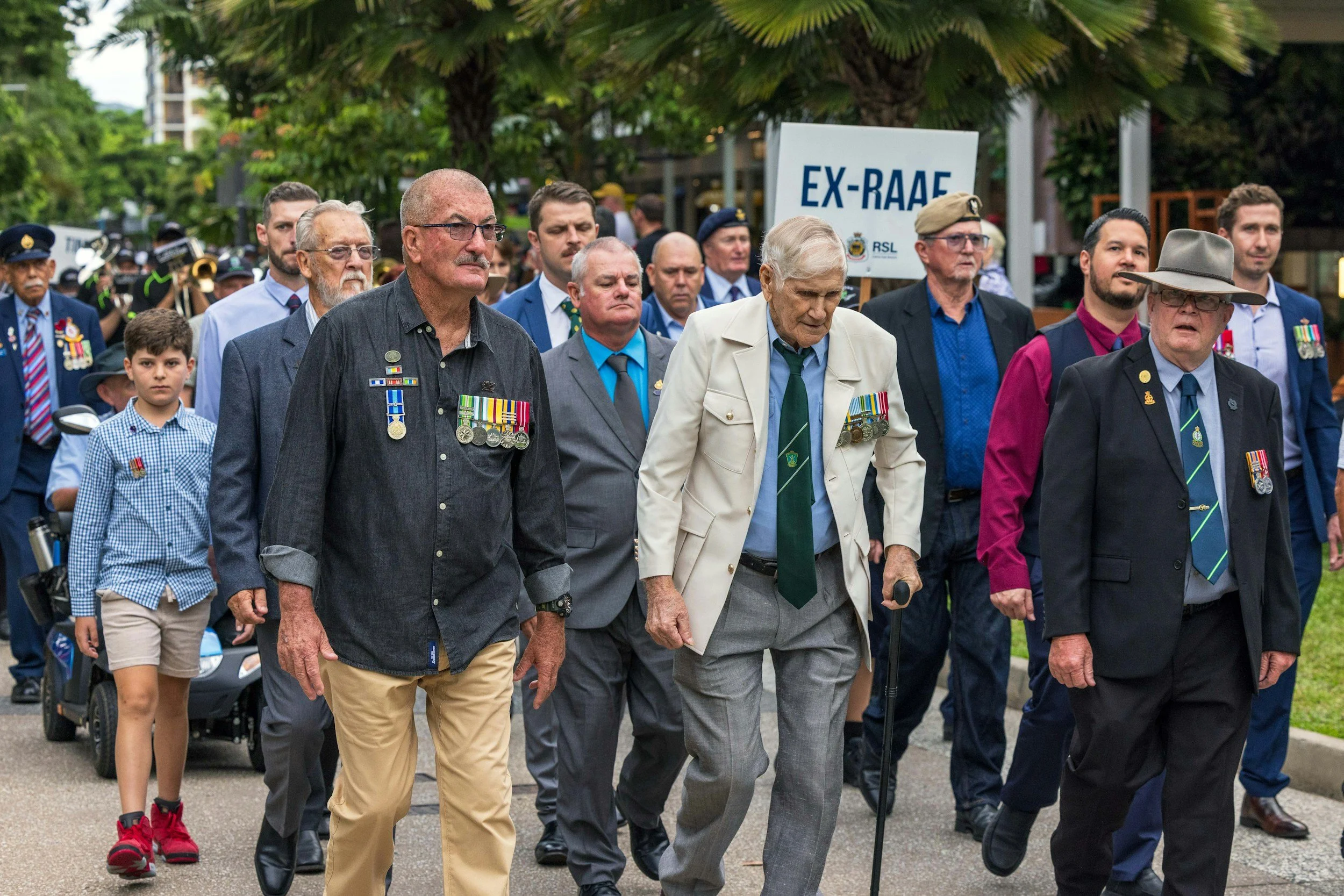
ANZAC Day — a day of remembrance in Australia and New Zealand, honouring those who served and died in war — has become a sore spot for me now, even though my eldest son has joined the ADF and I am proud of him. But I still cannot forgive or forget how the ADF became part of the chain of events that destroyed my life — because of East Timor, and because I never had any protection from my ex‑husband. If anything, I protected him. I hid so much of the domestic violence from the outside world. All the counselling we received, all the courses we attended to try to fix our marriage, all paid for by DVA, were a waste of time and money. His situation — the trauma, the psychological fallout, the mental‑health issues — was never going to be something anyone could fix. It was unfixable from the beginning.
I was hiding in Mexico trying to protect my children from the same man who had terrorised us in ways I still struggle to articulate — and who continued to harm us through financial abuse after he left. Yet I was deemed the unfit parent because of hearsay. But hiding in Mexico didn’t erase the dangers I was facing there either. I was trapped on both sides — damned if I stayed, damned if I returned. There was no version of my life in those years that offered safety, no path that didn’t carry risk. I was simply trying to survive in the only ways I could.
I remained in Australia for eight months trying to seek help. But I was suffering from shell‑shock as well. I was in a terrible state — so much so that I was terrified of sleeping indoors. Being homeless felt safer than being enclosed. I tried staying in a boarding house for two weeks, but the walls felt too close, the silence too loud, the memories too sharp. I didn’t take drugs on the streets. I didn’t drink alcohol. I simply felt safer outside than anywhere with a door that could close behind me.
There was one occasion when I became upset in public — I can’t even remember what triggered it — and a police officer approached me with concern. He took me to the psychiatric ward at Brisbane Children’s Hospital, where I was locked in and observed for the afternoon. They released me the same day, stating there was nothing mentally wrong with me. And that was almost harder to hear. Because if nothing was wrong with me, then why had every system treated me as though I was the problem. Emotionally, of course something was wrong — how could there not be — and it must have shown through in that moment. But I do thank the police officer for helping me. He could have arrested me for being a public nuisance, but he didn’t. He saw distress instead of disorder. He understood that something was wrong, even though I couldn’t tell him what I had just been through in Mexico, or that my children had been taken from me. I didn’t have the words. Who would at that stage. It has taken me years to find them. So again, thank you to the officer who found me in the mall at Fortitude Valley and took me to the psychiatric ward. In a small but meaningful way, he cared for me that day — and I must have needed it more than I realised.
The system was so slow in Australia that eight months later nothing had progressed from the day I arrived. I gave up trying — no one understood what I was trying to say. No one was listening. I had lost my children, and no one grasped the complications surrounding that. The advice was always the same: get a job, speak to Legal Aid, speak to a domestic‑violence organisation. But everything had happened in Mexico. No one could help me, again. I felt, moving through the formalities of bureaucratic red tape, that I was never going to move forward. In just over three years away, I had lost every form of support I once had in Australia — after living there for nineteen years before our family trip overseas.
It seems that as long as nothing goes wrong in your life, you fit the profile of a good citizen. But when everything collapses at once, you suddenly become someone the system doesn’t know what to do with — someone unwanted, inconvenient, too complicated to help.
So why did I go back to Mexico. The man I loved was there — José — the only support I had during the most difficult time of my life. And there was also that slim, irrational hope that whoever had destroyed my life might decide to help me, simply because I had no power and they seemed to have so much. But of course, that was never going to happen.
We spent 2020 to 2022 together before he disappeared too. He abandoned me, and I was devastated all over again. I fell onto the streets, and only then did I start taking drugs again as a way to forget. By that point, there was no hope left in my mind that life would ever return to anything familiar or safe. For three years — from 2022 to 2024 — I used drugs because I wanted everything to stop. I wanted my life to end. I felt I had nothing left to live for.
And through all of it, the ones who hid in the shadows were still there. I gave them a second chance to redeem themselves, to show even the smallest sign of humanity. But they chose the easiest option — to do nothing, and pretend they had done nothing. That’s why I can see it all so clearly now. It’s incredible what you learn from the streets. That experience, as brutal as it was, taught me things I will never forget.
And yet, even in that world, there was kindness. People shared what they had — food, clothes, small comforts. I didn’t drink alcohol, but people still offered what they could. It’s astonishing how you can get through the days without money. Survival becomes a kind of community effort. When someone gave me a few pesos and told me it was only for food, I respected that. I followed their instructions because it mattered to me to honour the intention behind the gesture.
There was a strange economy of generosity. Some things were easy to come by, others nearly impossible. A single cigarette could feel like a gift. A moment of human recognition. And in a life stripped down to nothing, those small acts meant more than anyone realised.
But I fell into the world of drugs as well. Very rarely did it cost me anything — and maybe that was part of the problem. When something comes easily, it becomes easier to lean on it. The people who helped me in that world came from the other side of life, and as long as I kept quiet, they didn’t care. It wasn’t constant, but it was enough to keep me moving quietly forward, enough to get through the days without drawing too much attention.
Some of the men knew José. They knew my children. They had seen what my ex‑husband was capable of. Word travels fast in those circles, and he wasn’t a liked man. In their world, no father abandons his family and leaves them financially stranded. So they helped me from time to time, in their own ways.
I never told the locals what was really happening. They formed their own opinions about whether to help me or not. Most people offered small acts of kindness — a bit of food, a drink, a packet of cigarettes. Even the smallest gesture felt enormous. A packet of cigarettes felt like a miracle. A few pesos felt like someone seeing me. A kind smile or a friendly hello meant more than anyone realised.
Of course, there were a few who looked down on me, convinced I had put myself in that position. But the vast majority didn’t judge me. Whether drugs were involved or not, most people didn’t care how I had ended up there. They were kind. They were warm. They helped me in small ways — sometimes with something tangible, sometimes with nothing more than a moment of human recognition. And in a life stripped down to nothing, that was everything.
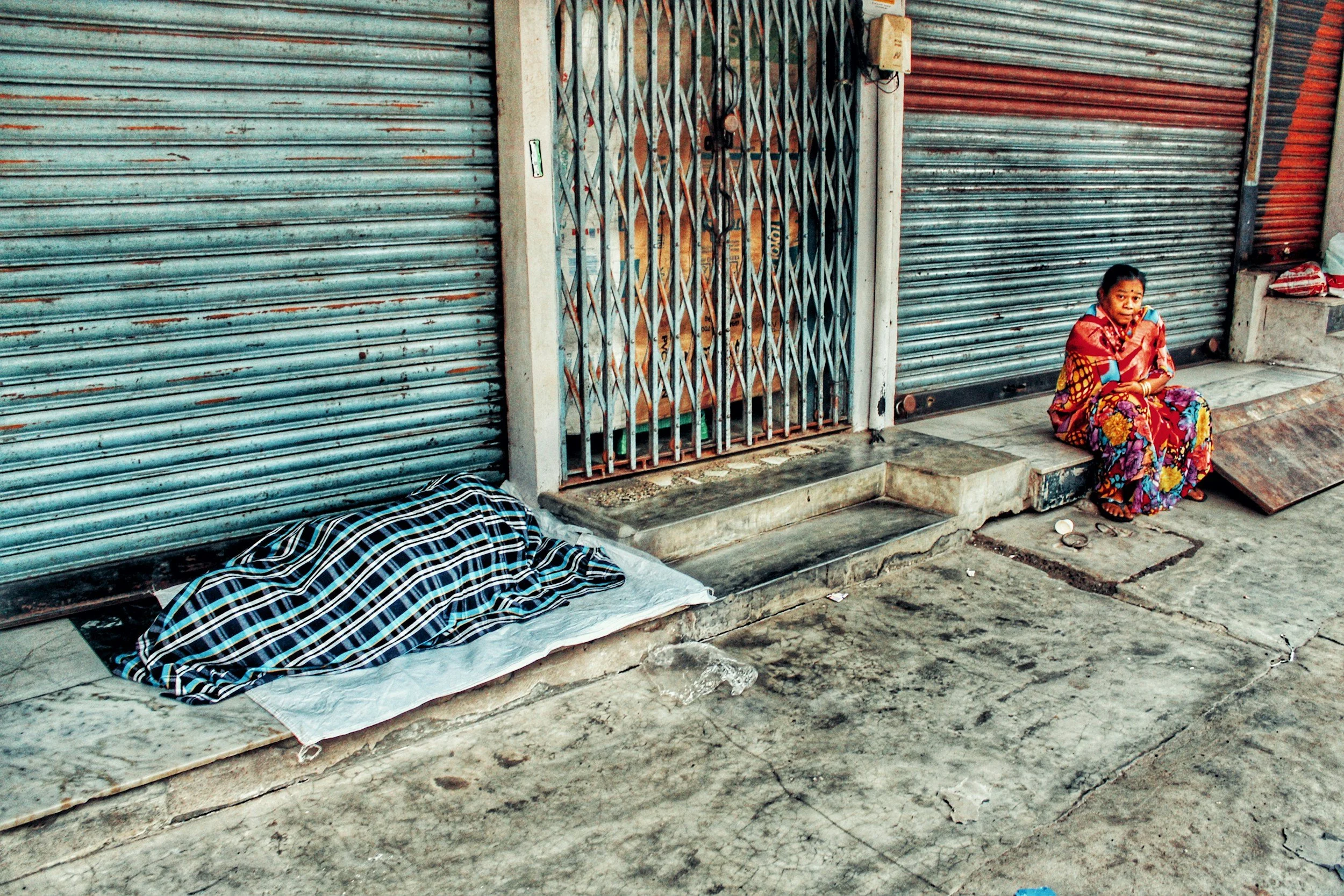
And honestly, unless you’ve been on the streets, it’s hard to understand how someone ends up there — and why. The reasons can be so complex. I think I was there because I was lost. Lo de Marcos was the last place I had been with my children. I wish there had been more support when everything went wrong. I wish I had known how to reach out for help. But mostly, I wish it had never happened. I am still hurt. I am still angry. I am still grieving. The only motivation I have now is finally having the chance to tell my side of the story — as unbelievable as it sounds.
So why did I take crystal meth. In the end, it was the one drug José had warned me to stay away from. After he left, it became a kind of defiance — a way of pushing back against the one boundary he had ever set for me. He was the person I believed I could depend on, and the day he walked away, something in me knew he wasn’t coming back. But I waited anyway. I waited until I couldn’t wait anymore. And then I realised he wasn’t mine, and maybe he never had been. After all the years of loving him, of imagining a life with him, the disappointment was crushing. And through it all, I still loved him. What a fool I felt.
For three years I used the drug as if there were no tomorrow. And the truth is, I don’t regret it. I liked the way it numbed things. It helped me get through some of the hardest emotional moments of my life. Drugs didn’t put me on the streets — domestic violence did. That’s a difficult concept for people to understand or acknowledge. So once I was already on the streets, I stopped caring. By then, it felt like every system had failed me completely. Where was I supposed to go from there.
It was a hazy time, and not just because of the drugs. I was still in absolute shock over everything that had happened. And somewhere in that blur, I made the mistake of falling in love with one of José’s closest friends. It was a different kind of love — quieter, more private. We kept it hidden because neither of us wanted the local gossip to invade the small world we had carved out for ourselves.
He carried his own kind of sadness, a weight he had been holding since he was a teenager. His life was nothing like mine, shaped by the CJNG world with its own dangers, loyalties, and burdens. He didn’t talk much about his past — he didn’t like to — but I knew he loved his daughter deeply. In that world, it was almost impossible to hold down a relationship, raise a child, or live anything resembling a normal life. He saw his daughter when he could, but not as often as he wanted. His work consumed him, and in his world, the job always came first.
So now I carry love for two men from Mexico, each for different reasons. But they share the same qualities — kindness, compassion, humility. In a life that had stripped me of almost everything, those qualities mattered more than I can ever explain.
Then one day, I simply decided I had had enough. I was bored, exhausted, and maybe — finally — ready to try to reconnect with my children. So I reached out to the people who had been waiting for me, quietly, patiently, without pressure. That was the most admirable thing about the community in Mexico: their kindness, their patience, their willingness to stand back and let me come to them in my own time. They didn’t push, they didn’t judge — they just waited until I was ready to ask for help.
And this is how I’ve had to do it: by reconnecting with my children through writing my story. So many years have passed that there was no life waiting for me to step back into with them. I don’t know if there ever will be. So I try to stay strong, hoping that one day my children will at least understand.
I feel more at peace now. There was so much I needed to release, and by sharing my story I’ve finally been able to breathe again. The beautiful souls of Lo de Marcos gave me something I didn’t know I still had — a sense of worth, a sense of being held. Their kindness and patience served a greater purpose in my life, and I will always be grateful for that. Whatever happens next, I want them to know that their support mattered, that it helped me find my voice again.
It has been a long process. With the help and support of the local community in Lo de Marcos, they arranged drug rehabilitation for me in Mexico. I stayed there for nearly eight months, and during that time I did a lot of thinking. Most of it was about what I was going to do with my life. That question still follows me — what is left of my life versus what I want to do with it. It’s a dilemma I haven’t solved yet. I have ideas, but nothing feels certain.
But I will never forget the kindness of the locals — both the expats and the Mexican community. They even arranged funding for my flights and a new passport. And eventually, I arrived back in New Zealand to reassess my life all over again.
Now I see two possible paths ahead of me. One is that I finally receive the recognition and support for what truly happened in Mexico — the domestic violence, the abandonment, and the terror that followed once my ex‑husband left. The other path is harder to admit: that nothing changes, that I continue to be ignored, and that the only place that still feels connected to my children’s memories is Mexico.
And I know that if I ever returned to Mexico, I might never see my children again. But even then, my love for them would not change. I can only hope they remember that I have always loved them, that I did everything I could with what I had, and that I am sorry for everything that happened. My four children deserved so much more.
I don’t know what the future holds. I only know that I’m still here, still trying to tell my story, still hoping that someone will finally listen.