Sexual Violence During the Marriage
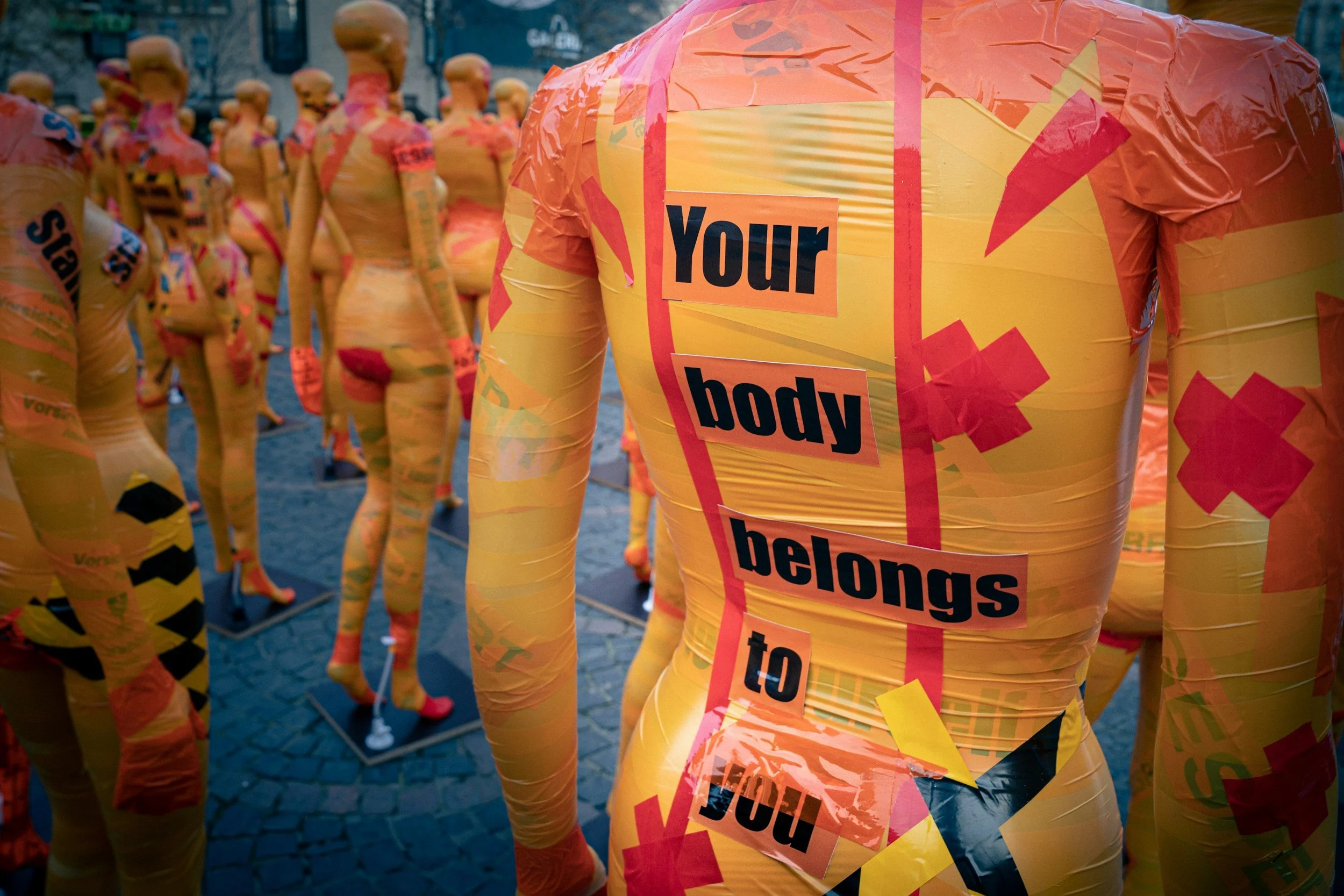
“Sexual violence in a marriage does not emerge from nowhere. It comes from a particular kind of man —”
What Type of Man
Sexual violence in a marriage does not emerge from nowhere. It comes from a particular kind of man — one who believes that intimacy is something he is owed, not something that is shared. A man who confuses compliance with desire. A man who interprets silence as permission because he has never learned to recognise fear.
It comes from a man who treats a partner’s boundaries as obstacles rather than limits, who frames pressure as affection, who uses guilt as persuasion, and who interprets withdrawal as defiance. It comes from a man who believes his needs are central and that the woman beside him exists to stabilise his moods, absorb his frustrations, and validate his entitlement.
This type of man does not need to raise his voice to exert control. He only needs to create an environment where saying no feels dangerous, where resistance carries consequences, and where the safest option is to disappear inside yourself. He is the kind of man who believes that sex is a measure of loyalty, that a wife’s discomfort is an inconvenience, that her body is a resource, that her silence is agreement, and that her compliance is love.
He is the kind of man who can violate a boundary and then blame the woman for the fallout. The kind who can involve others in sexual situations and still position himself as the victim. The kind who can harm and then demand comfort. The kind who can abandon his family and still believe he is the one who has been wronged.
This is the type of man who creates a pattern of sexual violence inside a marriage — not because he loses control, but because he expects control. Not because he misunderstands consent, but because he disregards it. Not because he is confused, but because he is entitled.
Throughout my marriage, I did not understand this. I did not have the language for coercion or assault. I only understood the consequences of resistance.
Sexual Violence During the Marriage
Sexual violence in a marriage is rarely a single event. It is a pattern. It is the slow removal of the right to say no. It is coercion disguised as affection, pressure framed as intimacy, and fear embedded so deeply into daily life that compliance begins to look like agreement. It is not defined by force alone. It is defined by the absence of freedom.
In legal terms, sexual violence includes any sexual act that is not freely and voluntarily agreed to. In lived experience, it includes every moment where saying no feels unsafe, every moment where silence becomes the only available form of self‑protection, and every moment where the body endures what the mind cannot stop.
Throughout my marriage, I did not understand the language of consent, coercion, or assault. I only understood the consequences of resistance.
Laws (Australia, New Zealand, Mexico)
Across all jurisdictions I lived in, the law is clear: marriage does not create permanent consent.
Australia
•Consent must be free and voluntary.
•Intoxication, coercion, manipulation, and fear invalidate consent.
•Compliance is not consent.
•Marriage provides no exemption.
New Zealand
•Consent must be freely and voluntarily given.
•Marital rape is recognised as rape.
•The absence of resistance does not imply agreement.
Mexico
•Sexual violence within marriage is a crime.
•Coercion, intimidation, manipulation, and intoxication invalidate consent.
•Marriage does not grant sexual entitlement.
Across all three countries, the legal definitions align with what I lived, even when I did not yet have the words.
How It Happened to Me
The pattern began quietly. He encouraged me to drink when I did not want to, framing it as something “fun” or “normal” for couples. The effect was predictable: I became intoxicated, and he initiated sexual activity I did not want, did not consent to, or felt unable to refuse.
When I tried to resist, he became angry, withdrawn, or cold. I learned that refusal escalated the situation. I learned that compliance kept the peace. My body complied long after my mind had stopped agreeing.
There were incidents where he pressured me into sexual acts that caused distress or shame. These acts were not discussed beforehand. I did not feel able to refuse. He used guilt, silence, and emotional manipulation as tools. Over time, I understood that my discomfort was irrelevant to him. My role was to absorb what he wanted.
On some occasions, he involved other people in sexual situations without my free and voluntary agreement. In Australia, it was with another woman. It was something he wanted, and at the time I believed that agreeing would keep the peace and make him happy. I did not want it, but I did not feel I had the option to refuse.
Later, in Mexico, there were incidents involving two different couples, and once with another man. I was intoxicated or drugged during all of these situations, and my ability to consent was impaired. I did not feel safe to refuse, and I did not freely agree to participate. My role was assumed rather than chosen.
After each incident, I felt awful and embarrassed. The shame was immediate, even though the choices had not been mine. I carried the emotional consequences of situations he orchestrated, while he treated my discomfort as irrelevant or inconvenient. These events were not expressions of intimacy. They were extensions of the same pattern of coercion, entitlement, and control that defined the sexual dynamics of the marriage.
One incident stands out because it reveals the depth of his entitlement. He engaged in sexual activity with another man while I was in the house but not involved. The man received oral sex from him but did not reciprocate. When they left the room, my husband turned his anger on me. He blamed me for the other man’s behaviour, as though I were responsible for the choices of another adult. It was a moment of displaced blame, humiliation, and control — consistent with the broader pattern of sexualised coercion that shaped our marriage.
The final incident occurred on the day he abandoned his family in Mexico. He raped me that day. There was no argument, no escalation, no warning. He initiated sexual activity in a way that made it clear resistance would be unsafe. I froze, as I had many times before, and he proceeded despite my lack of consent. This was the last time he touched me. I experienced it as a deliberate act — the culmination of years of coercion, entitlement, and control.
Across all of these incidents, I did not freely and voluntarily consent. My responses were shaped by fear, conditioning, and the cumulative impact of coercive control. At the time, I did not have the language to describe what was happening. Now I do.
I will make it clear that I am not interested in, nor do I have any future interest in, sexual activity involving multiple partners, couples, or any situation with two or more people, whether men or women. I do not like it, and I have never liked it. I respect that some people choose those dynamics, but they are not for me. I am, and have always been, someone who wants one partner — one man who is respectful, attentive, and understands the difference between genuine intimacy and sex that exists only to satisfy himself. What I want is connection, not performance; reciprocity, not pressure; intimacy, not entitlement.
Examples (Non‑Graphic, Factual)
•Being pressured to drink or take drugs so he could initiate sex while I was impaired.
•Being touched or used sexually when I was too intoxicated to resist.
•Being pressured into sexual acts that caused distress or shame.
•Being manipulated through guilt, silence, or anger to obtain compliance.
•Being involved in sexual situations with other people without my free agreement.
•Being blamed for the behaviour of others in sexual contexts I did not choose.
•Being punished emotionally when I attempted to withdraw consent.
•Being treated as though my body existed to stabilise his moods.
Each example is part of the same pattern: coercion, entitlement, and the systematic erosion of autonomy.
Where It Left Me — Physically, Mentally
Physically
•Exhausted
•Dissociated
•Hypervigilant
•Unable to sleep
•Unable to eat
•A body that no longer felt like mine
Mentally
•Fragmented
•Confused
•Ashamed of things that were not my fault
•Unable to understand why I could not “just cope”
•Carrying the weight of violations I could not yet name
•Breaking in ways that looked sudden to others but were years in the making
The collapse was not a failure of strength. It was the body refusing to endure what the mind had been forced to normalise.
Why It Still Feels Like Nothing Can Fix the Damage Now
Because the consequences were not abstract. They were lived.
I lost my children not because I was unfit, but because I was unprotected.
I lost my stability because the harm was cumulative and unacknowledged.
I lost years of my life to recovery, documentation, and trying to understand what had been done to me.
The damage feels unfixable because the systems that failed me cannot retroactively protect me. They cannot return the years. They cannot undo the collapse. They cannot repair the rupture with my children. They cannot give back the version of me that existed before the harm.
But naming it — accurately, without minimisation — is the first form of repair.
The Cross‑Border Trap
One of the most enduring consequences of this history is the cross‑border trap it created — a trap that keeps me separated from my children and prevents me from returning to the country where they live. My ex‑husband resides in Australia, and the threat he poses is not theoretical or imagined. It is grounded in lived events, including the day he pointed a gun at my head and threatened my life. That moment did not exist in isolation. It was part of the same pattern of coercion, entitlement, and violence that shaped the marriage. It is a risk that has never been acknowledged by the systems meant to protect me.
My children are in Australia. I am in New Zealand. He is in Australia with one of our children. The distance between us is not emotional; it is enforced by safety. Returning to Australia would place me in proximity to a man who has already demonstrated what he is capable of. It would mean entering a jurisdiction where I have no protection order, no institutional support, and no guarantee that the violence would not escalate. It would mean trusting systems that previously minimised, misunderstood, or ignored the harm.
This is not the only reason I cannot return, but it is one of the most significant. There are other factors — the cumulative trauma, the destabilisation, the lack of safe reporting avenues, the cross‑border failures that left me without protection. Together, they form a reality I cannot override with willpower or longing. I am separated from my children not because I chose distance, but because safety demanded it. I am caught between jurisdictions, between responsibilities, between the need to survive and the need to be a mother.
I do not know where to go from here. I only know that returning to Australia is not safe, and that remaining in New Zealand keeps me alive. The cost of that safety is the distance from my children — a cost I carry every day, and one that no system has yet recognised or repaired.
Closure
What happened to me was not a misunderstanding. It was sexual violence carried out under the cover of marriage. The law recognises it. My body remembers it. The consequences prove it. This chapter is not about blame; it is about accuracy. It is the first time I have allowed the language to match the reality. And in naming it, I reclaim the one thing that was taken from me long before I understood its value — my right to the truth.