Just an Army Wife — No One Protects Us from Domestic Violence
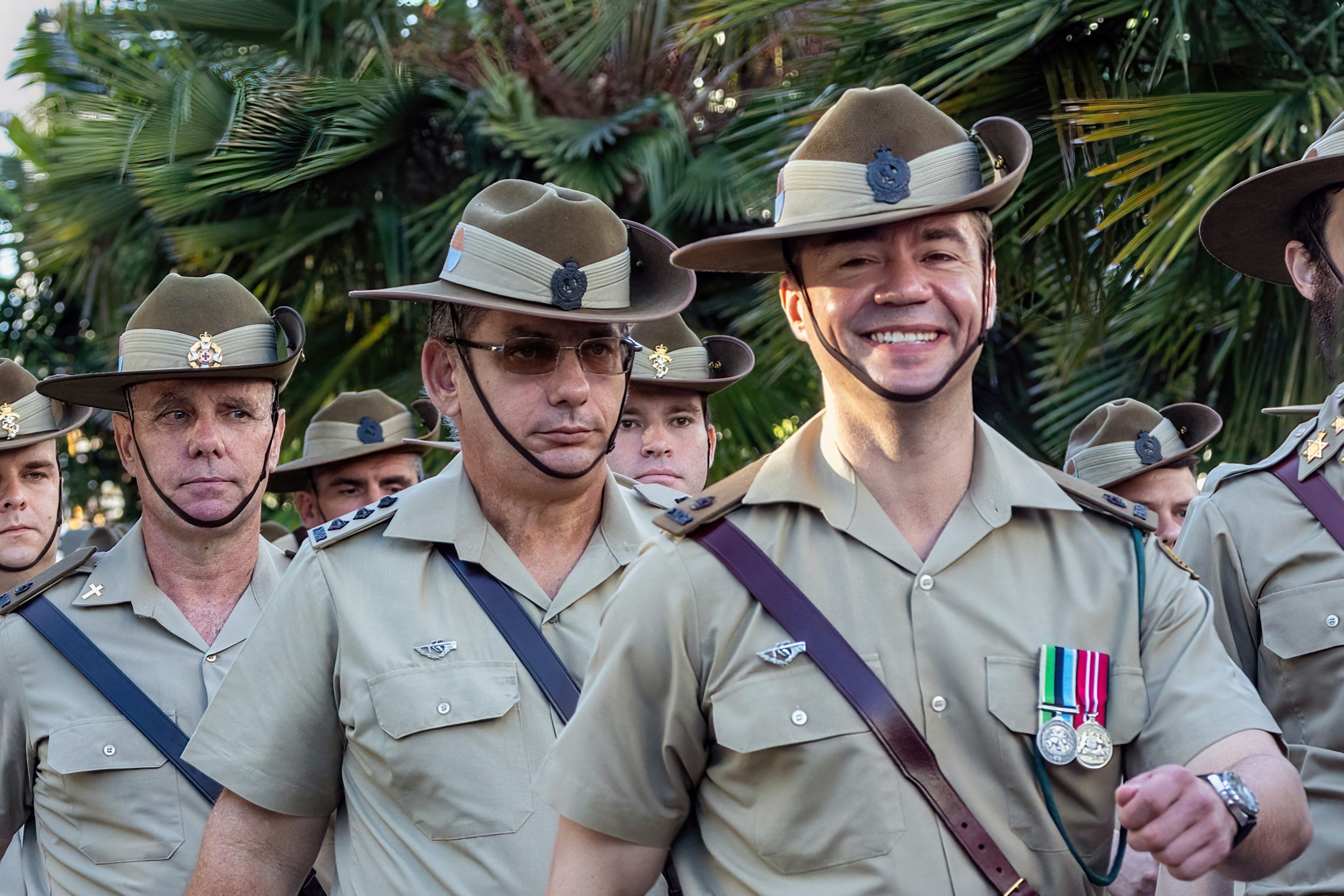
“No one protects the army wives from domestic violence”.
People assume danger has a geography. They imagine it belongs to foreign soil, distant conflicts, places marked by checkpoints and camouflage. But the first war I survived did not happen overseas. It happened quietly, domestically, incrementally — inside a marriage sanctioned by the institution that insisted I was just an army wife. What followed would expose the limits of that narrative, and the cost of believing it. I learned early that the title meant visibility when it suited them, and invisibility when it didn’t — a role defined more by expectation than truth.
For years, the phrase “just an army wife” functioned as both descriptor and dismissal. It reduced a complex role to a stereotype: supportive, adaptable, grateful, and ultimately peripheral. A tidy category that allowed institutions to file women like me into the background of a man’s uniformed life.
The public narrative of military family life is well rehearsed. Independence. Resilience. A kind of cheerful competence. Raising children alone during deployments. Turning remote postings into temporary homes. Learning to navigate new towns, make new friends, join mothers’ groups, enrol the children into kindy or school every few years. A life framed as camaraderie and pride — the brochure version.
The reality diverges sharply.
Behind the salutes and ceremonial optics, army spouses become the emotional infrastructure of their households. I managed it all — and for the vast majority of that time, I also held down a full‑time job, contributing significantly to the household finances.
In my case, the danger did not remain overseas. It came home. It came from the person the public expected me to trust, and from the systems that were supposed to protect me. It arrived in the form of domestic violence, coercion, threats, and a gun pressed to my head. It unfolded over more than twenty years — longer than he ever wore the uniform. The erosion of safety was slow, deliberate, and largely invisible to those who preferred not to see it.
By definition, a war zone is a region where active combat occurs, where normal rights do not apply, and where civilians live with extreme violence and instability. A place where survival depends on vigilance and the ability to read danger before it arrives. By that definition, I lived in a war zone. Not one marked on maps, but one constructed inside a home, inside a marriage, inside a system that refused to intervene. A war zone defined by unpredictability, threat, and the constant recalibration of safety. A place where I learned to monitor tone, footsteps, silence, the shift in someone’s breathing. A place where sleep became a negotiation with fear.
When he abandoned us, the war did not end. It changed shape.
Physical threats became financial control.
Violence became institutional silence.
And in the aftermath — when I was already destabilised — the danger escalated into something no one could have predicted.
The threat that entered my life after he left was not metaphorical. It was not imagined. It was not the exaggerated fear of a distressed woman. It was real, organised, and operating in the shadows of the place I lived. The presence of organised criminal groups — known for violence, intimidation, and control — was not a rumour. It was a proximity. A pressure. A reminder of what happens when institutions fail to intervene early, leaving a woman unprotected in a region where silence is currency and fear is a form of governance.
Their influence was ambient. It lived in lowered voices, avoided eye contact, and the quiet movement of information. The rules were unwritten but absolute: do not draw attention. Do not ask questions. Do not disrupt the narrative the town depends on. Without intending to, I did all three.
I was a foreign woman with children, already vulnerable from years of domestic abuse, already destabilised by abandonment, already carrying the weight of institutional neglect. That combination — vulnerability plus visibility — made me a target for pressures I could not have anticipated. The intimidation was subtle until it wasn’t. The surveillance was quiet until it wasn’t. The fear was manageable until it wasn’t. And through all of it, I waited for someone — anyone — to step in. No one did.
The cartel years revealed a pattern: danger is compounded by silence. And the silence that harmed me most did not come from criminals. It came from institutions. I reported threats. I reported violence. I reported escalating danger. I reported patterns any trained professional should have recognised. Nothing happened.
The systems designed to protect me looked at his uniform, his rank, his reputation, and decided the truth was too inconvenient. They preferred the narrative where I was unstable, confused, dramatic. They preferred the version where the soldier was steady and the wife was fragile. They preferred silence because silence required no paperwork, no accountability, no disruption to the image they needed to maintain.
Their inaction was not passive. It was structural. Every unanswered report, every missing file, every delayed response, every polite dismissal communicated the same message: your safety is optional. His reputation is not.
Somewhere in the middle of the threats, the silence, and the institutional indifference, I realised something that should have been obvious: I was safer alone than partnered. It was not a dramatic revelation. It was a quiet one. A morning when the house felt lighter without him. An evening when the children laughed without flinching. A day when my breathing shifted — deeper, steadier, no longer calibrated to someone else’s temper.
Safety arrived in increments.
In the absence of fear.
In the absence of him.
In the absence of the institutions that had failed me.
People insist that trauma can be outrun.
“Just move on with your life. It will get better.”
As if trauma is a season.
As if the body forgets what it learned to survive.
But the shock does not disappear.
It settles.
It embeds.
It becomes part of the architecture of the nervous system.
I am not being negative when I say the damage is irreversible in places. I am being accurate. Some parts of me will never return to their original shape. Some reflexes cannot be unlearned on command. Some memories do not fade because they make others uncomfortable.
This is not defeat.
It is the truth of the aftermath.
The truth of what happens when a person lives for years in conditions that meet every definition of a war zone except the one the world is willing to acknowledge. The truth of what happens when the danger is intimate, when institutions look away, when violence is both personal and systemic.
I am not convincing myself of anything.
I am recognising what my body has known all along:
the war may be over, but the impact is real —
and it deserves to be named without apology.