12. Intimacy
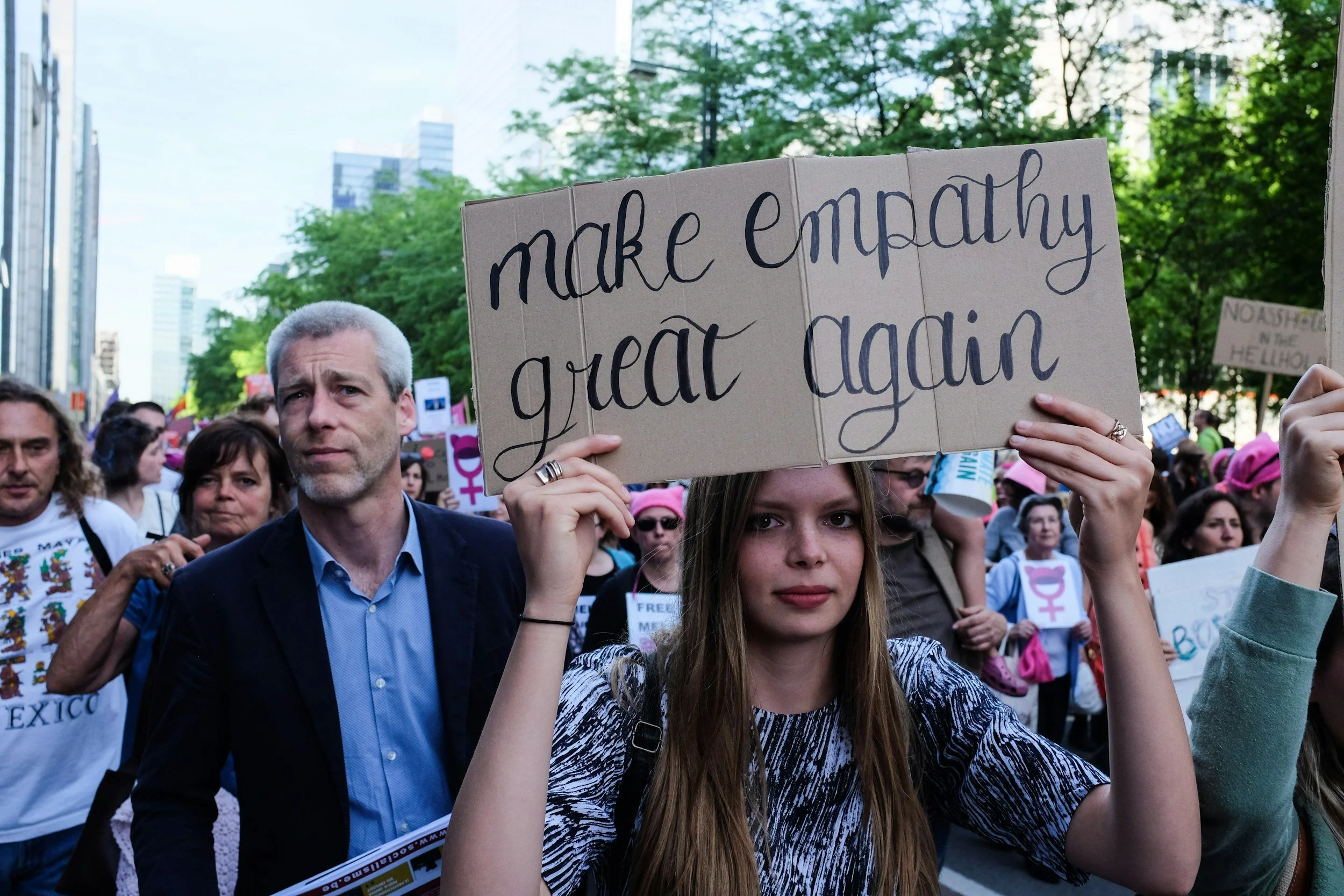
Before I go any further, I should admit something that was happening alongside the darker parts of the story — something human, ordinary, and perhaps inevitable after being with one man for so many years. Intimacy. I don’t think I had ever truly experienced it before my ex‑husband left. I met him when I was twenty‑three, and we were together for nineteen years. The experiences I had with men before that belonged to a younger, more naïve version of myself. Real intimacy — the kind that involves being seen, understood, and met with gentleness — didn’t enter my life until I met José. Intimacy, as I eventually understood it, is the experience of being known — not just touched or accompanied, but seen fully, quietly, without performance. It is the space where trust and vulnerability coexist, where a person can exhale because nothing is being demanded of them. It can be emotional, physical, intellectual, or some mixture of all three; it is not defined by sex or romance, though both often try to claim it. At its core, intimacy is the recognition that someone is paying attention — real attention — to who you are rather than what you provide. And this is where empathy becomes the dividing line. Without empathy, there is no intimacy, only proximity. A person can share a home, a bed, a life with you and still never truly see you. Many relationships endure for years without a single moment of genuine connection, because endurance is not intimacy, obligation is not intimacy, and routine is not intimacy. Intimacy requires empathy — the deliberate, attentive, human act of noticing another person’s inner world — and its absence can go undetected for decades until the moment someone finally offers it. It’s something many women discover only later in life: that what they once believed was “normal” was actually the absence of emotional connection, not the presence of it. When José left, and I realised he was never coming back, I went through a kind of grief. It wasn’t dramatic. It was quiet, private, and surprisingly brief. The truth is, he had made an impression — not just emotionally, but in the way he carried himself, the way he paid attention, the way he made me feel seen. After that, the idea of meeting someone new didn’t feel impossible. It felt… intriguing.
And in Mexico, men are forward. Not in a disrespectful way — but with an intriguing confidence that isn’t arrogant or performative. It’s simply direct. They don’t waste time with games or ambiguity. Their message is clear from the beginning: I like you. Do you want to come to my house or not? It’s surprisingly easy to understand, even without a shared language. A gesture, a look, a mischievous smile — the communication is simple, honest, unmistakable. And I liked that. After years of navigating emotional complexity, the straightforwardness felt refreshing. And as long as they were single, I had no objection to taking a brief pause in my life to be held by someone who understood both empathy and intimacy. That combination — being met with attention and treated with care — created a kind of connection I had never experienced before, one that was impossible to ignore. I’m sure men all over the world are still trying to understand what truly draws a woman in, and the truth is far simpler than they realise: empathy creates intimacy, and intimacy deepens empathy. The two qualities reinforce each other, and together they form a kind of quiet perfection. And you can’t fake them. You can develop them, you can learn them, but you can never counterfeit them.
After saying no more times than I can count, one day I simply thought: Why am I denying myself? I was single. I was lonely. And I was allowed to feel alive. There was no guilt in it, no second‑guessing. Just a quiet acceptance that I didn’t have to keep shrinking myself to fit the version of life I had been living before. I could say yes. I could choose something for myself. I could step into a moment without analysing it to death. And in that small act — that simple yes — something in me changed.
There is something distinct about Mexican men: a quietness, a sensitivity, a way of looking at you as if they’re listening even when you haven’t spoken. Some were rough around the edges, some were ordinary working men, some carried a hint of danger, but they all had a kind of presence that was hard to ignore.
After a while, I noticed that many of the expats carried the same unhurried presence I had seen in the locals — moving slowly through time, relaxed, calm, never in a rush. I developed a theory about men like that: if they aren’t rushed in everyday life, they aren’t rushed in intimacy either. It’s a pity it took me so many years to figure that out. And I’m not trying to be unkind, but with so many men in the world, how did I end up with the one who hurried through everything — and I mean everything. My entire life, I had no idea what I was missing, and I feel for any woman who has lived in that same kind of absence without realising it.
Maybe it has something to do with stepping out of the fast‑paced modern world and embracing the slower rhythm that Mexico offers. Slowing down isn’t easy, and it was unfortunate that my ex‑husband never learned those qualities, even while living in a place built on patience and presence. My pet hate now is simple: men who rush through everything, as if getting their needs met is the only thing that matters. It’s selfish, it’s egotistical, and it leaves no room for connection. Looking back, I can’t believe how much I tolerated — nineteen years with someone who never slowed down long enough to notice me at all.
It began as a theory — a quiet observation I kept to myself until the evidence became impossible to ignore. There were men who moved slowly in the world. Not hurried or restless, but carrying an unhurried presence that felt almost foreign after years of living in a state of vigilance. And the more I watched them, the more I realised that slowness wasn’t laziness or indifference — it was awareness. It was attention. It was the ability to be present in a way I had never known before.
José was the first to reveal the pattern, but he wasn’t the only one. Others appeared in the same season of my life — men whose paths crossed mine at a time when everything else was collapsing. They weren’t connected to each other, yet they shared something unmistakable: a way of approaching connection as if time were abundant, not scarce. As if intimacy were something to inhabit rather than rush through.

The Bad Boy — the one with the reputation
He lived in a world people didn’t speak about openly — a world with its own rules, loyalties, and silences. But none of that touched the way he treated me. We had known each other for five years. He knew my children. He drifted in and out of the house when José was around, always respectful, never overstaying.
What surprised me wasn’t the attention. It was the gentleness.
With me, he was affectionate, attentive, patient in a way that didn’t match the sharp‑edged life he came from. He listened with his eyes. He moved slowly, deliberately, as if the noise of his other world fell away the moment I stepped through his door. He didn’t speak English and I didn’t speak Spanish, but connection doesn’t always need language. Sometimes instinct is enough.
He became a small, private space where I could breathe.
The Tattooed Man — the one who carried his history on his skin
He was covered in tattoos from head to toe — the kind that told stories without needing to be explained. Prison tattoos, I assumed, though I never asked. In that world, questions were currency, and I had learned to let people reveal only what they chose.
Despite the intensity of his appearance, he carried himself with a quiet confidence, a stillness that felt almost gentle. Nothing about him was rushed. Nothing was careless. He moved with intention, with presence, with an ease that made me feel unexpectedly safe.
He reminded me that softness can come from unexpected places.
The Neighbour — the one who stayed a friend
He had once been part of the small community where my children and I lived. We were neighbours, familiar in the easy way people become when they share the same street and the same rhythms. He spoke English well, and after we crossed that line once, nothing became awkward. Nothing changed.
It was simple. Honest. Uncomplicated.
He was proof that connection didn’t have to be dramatic to matter.
The Marine — the one who surprised me
A retired US Marine, born in Mexico — a man who didn’t fit neatly into any single category. He carried a steadiness shaped by discipline and experience, a quiet confidence that felt grounding rather than imposing.
He was my No. 2 all‑time favourite, though I wasn’t keeping score.
With him, too, there was no rush. No pressure. No expectation.
Just presence.
He reminded me that desire could be simple, human, and free of complication.
The Pattern
It would be easy to treat these encounters as separate stories, but that isn’t what stayed with me. What stayed was the pattern that emerged so quietly I almost missed it.
Each of them moved slowly.
Not lazily. Not passively.
Just… slowly.
As if time expanded instead of contracted.
They didn’t rush conversation.
They didn’t rush connection.
They didn’t rush me.
Their attention was steady, deliberate, and grounding — a contrast to the years I had spent bracing for impact, carrying responsibility, and living in a state of constant readiness.
Presence, I realised, is its own kind of intimacy.
These men didn’t fix my life. They didn’t rescue me. But they interrupted the pace of my survival long enough for me to remember what it felt like to be seen without being used, wanted without being needed, touched without being taken from.
The pattern wasn’t about them.
It was about the absence they revealed in my own life — the absence of gentleness, ease, and being met instead of managed.
The Revelation
The revelation surfaced slowly:
I could exist in connection without being consumed by it.
For years, I had carried the emotional weight of other people’s needs, moods, and expectations. I had learned to shrink myself to keep the peace. I had forgotten what it felt like to choose something simply because it felt good, or safe, or interesting.
These men didn’t demand anything from me.
They didn’t collapse into me.
They didn’t ask me to carry their history.
They didn’t punish me for having boundaries.
They met me where I was.
And in that meeting, I recognised something I had forgotten:
my body, my time, my attention, and my heart belonged to me.
I realised I didn’t want another relationship — not because I was bitter, but because I finally understood the cost I had paid in the past. I wasn’t willing to lose myself again.
What I wanted was something lighter.
Something human.
Something that didn’t fracture me.
The revelation was simple:
I could choose what didn’t hurt.
I could choose what didn’t diminish me.
I could choose myself.
The Shift
Once I understood the pattern, everything else began to rearrange itself. Not dramatically — just truthfully.
I stopped moving toward people who rushed me.
I stopped explaining myself to people who didn’t listen.
I stopped giving my time to anyone who treated my presence as something to consume.
It wasn’t rebellion.
It was recalibration.
A quiet internal no where there used to be hesitation.
A quiet internal yes where there used to be fear.
I trusted my instincts again — not the instincts sharpened by survival, but the instincts that belong to a woman who knows her own worth.
I stopped choosing people who cost me pieces of myself.
I started choosing people who let me stay whole.
The aftermath wasn’t dramatic. It was steady, grounded, and quietly transformative. I moved differently in the world — not cautiously, but clearly. I no longer mistook intensity for connection. I no longer confused obligation with love. I no longer tolerated emotional labour disguised as partnership. Some people didn’t understand the change. They were used to the version of me who over‑functioned, who absorbed impact, who made herself small. When I stopped doing that, they mistook it for distance. But it wasn’t distance. It was clarity.
The men who moved slowly didn’t become permanent fixtures in my life. They weren’t meant to. They belonged to a specific chapter — the chapter where I needed to remember softness after years of hardness. They didn’t save me. They didn’t replace anyone. They didn’t fill a void. They simply reminded me that I was still alive. And once I remembered that, I didn’t forget again.
As I examined these experiences, a deeper truth surfaced: I had lost myself a long time ago. When it came to men, I had never been met with empathy — not the kind that sees you, listens to you, or recognises your inner world. And without empathy, I had never experienced intimacy. Not truly. Not before these experiences.
What was invigorating about these encounters was the absence of expectation. For the first time in a very long time, I found myself drawn to a life with no strings attached. I had never really stepped into that world before. It was new to me — light, uncomplicated, free of demands. No commitments, no relationship, no promises, and certainly none of the emotional labour I had carried for years. Just mutual respect and a shared understanding that neither of us owed the other anything beyond honesty. I suppose some people would call it “friends‑with‑benefits.” I liked it. It suited me. It was something I could get used to.
It felt like stepping into a whole new world — one where I wasn’t defined by someone else’s needs or moods, one where I didn’t have to brace myself for disappointment or betrayal. It was simple. It was human. And it was mine. Somewhere along the way, I realised something I hadn’t been ready to admit before: I don’t think I ever want another relationship again. I can’t deal with the heartache. Falling in love is not something I do easily, and when I do, it takes me a long time to recover if it falls apart. Too long. Longer than people realise.
I don’t need a man in my life to love me. But I do love men — their energy, their presence, their warmth. And I always will. What I don’t need anymore is the part that breaks me. The part that asks me to carry more than my share. The part that demands I shrink myself to fit someone else’s comfort. I’ve lived that life. I’ve paid for it in ways most people will never see. Now, I choose something different. Something lighter. Something that doesn’t cost me pieces of myself. And maybe that’s the real shift — not the men, not the lifestyle, but the understanding that I am allowed to choose what doesn’t hurt.
But I wasn’t interested in saying yes to just anyone. There had to be something special — a nice smile, a friendly laugh, a gentle way of being, someone who felt sweet and fun rather than complicated or demanding. I had offers from other men, plenty of them, but if the connection didn’t feel right, I said no. Sometimes I said no to the same men for three years straight. They just weren’t my type, and no meant no.
What surprised me was how natural it became to trust my instincts again. After years of being worn down, years of carrying responsibility and fear, I had forgotten what it felt like to choose something simply because it felt good, or safe, or interesting. Saying no wasn’t about rejection; it was about recognising myself again. Saying yes wasn’t about filling a void; it was about allowing myself to feel alive.
These choices — small, private, uncomplicated — became a quiet reclamation. A reminder that I could still decide what I wanted. A reminder that desire didn’t have to be tangled with obligation. A reminder that I could enjoy someone’s company without losing myself in the process.
And yet there was a common thread: a kind of confidence without arrogance, a presence without pressure. The men I desired understood connection in a way that felt instinctive, almost cultural — an ease with affection, a comfort in their own skin, a willingness to be attentive without making it complicated.
I know it sounds biased, and I certainly haven’t travelled the world collecting comparisons, but in my experience, Mexican men had a way of showing interest that felt both natural and deeply respectful. They were attentive in a way I hadn’t known before. They noticed the small things — the way I breathed, the way I responded, the way I relaxed when I felt safe. They were faultless in that sense: not perfect, not idealised, but present.
After years of feeling unseen, years of carrying responsibility and tension and fear, these moments were a revelation. They reminded me that I was still a woman with instincts and desires that had been buried under survival for far too long. I’m not claiming to be an expert on men from different countries. I’m not making a universal statement. I’m simply speaking from my own life, my own small corner of experience. And from where I stood — in that time, in that place, in that fragile chapter of my life — Mexican men were the ones who reminded me what it felt like to be wanted in a way that was gentle, confident, and deeply human.
They didn’t fix anything. They didn’t save me. But they gave me back a part of myself I thought I had lost. And that mattered.
Who are the best lovers in the world? I can’t say. It wouldn’t be fair to anyone. And besides — some things are better left unmeasured, unranked, unnamed. Some experiences belong to the private archive — the ones that shaped you quietly, the ones that don’t need to be justified or explained. The ones that arrived at exactly the moment you needed to remember you were still alive.
It wasn’t about replacing anyone. It wasn’t about proving anything. It was about remembering who I was before everything fell apart — and discovering who I could be after.