Domestic Violence in Two Worlds — CJNG and the ADF
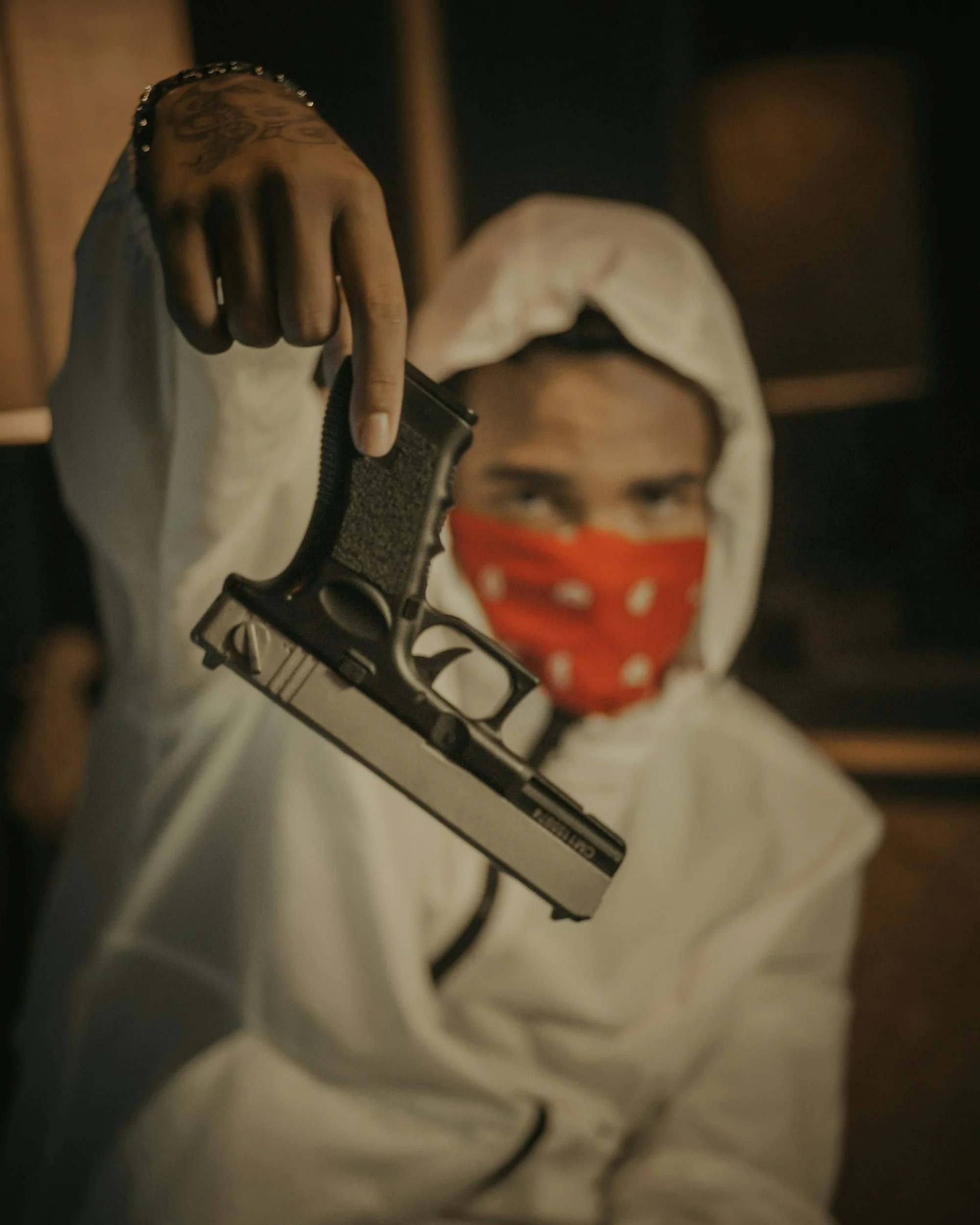
“And one truth sits beneath all of it: only one world ever put a gun to my head”.
I. What Violence Reveals About Systems
Most people talk about domestic violence as if it happens in isolation — a private failure, a moment of temper, a single household problem. But violence never exists alone. It is shaped by the world the man belongs to, the culture that raised him, and the institution that protects him. I learned this not from theory, but from living inside two radically different ecosystems of power: one shaped by the margins surrounding the Jalisco New Generation Cartel (CJNG) — a violent, heavily armed transnational criminal organization designated as a Foreign Terrorist Organization and responsible for severe harm and human rights violations — and the other shaped by the Australian Defence Force (ADF), a formal military institution responsible for Australia’s national defence and public trust.
One world was feared.
One world was trusted.
Both contained domestic violence.
Both contained men who worked long hours and came home tired.
Both contained families trying to survive.
But the aftermath — the meaning‑making, the narrative, the consequences — could not have been more different.
•In the CJNG world, the violence stayed inside the house.
•In the ADF world, the violence was absorbed by the institution and reissued as a story that erased the victim entirely.
This is not a story about good men or bad men.
It is a story about systems — and how those systems shape the truth.
II. The CJNG World: Violence Without a Shield
People imagine the CJNG world as inherently violent, chaotic, and dangerous. They are not wrong about the danger, but they are wrong about the psychology. In this environment — the world of the marginalised, the criminalised, the men who live outside the law — violence is not hidden behind procedure. It is raw, unfiltered, and often followed by a collapse that looks almost like grief.When domestic violence happens here, the aftermath is immediate and inward:
•Why did I do it
•What is wrong with me
•I’m failing my family
•Maybe they’re better off without me
This is not accountability; it is shame — corrosive, consuming, and familiar. These men often grew up with violence as a language and know what it feels like to be powerless, so when they become the source of fear in their own home, the shame hits hard. They have no colleagues to reassure them, no supervisors to protect them, no institution to rewrite the story — only themselves, their partner, and the children watching from the hallway.
The cycle becomes predictable:
•violence
•apology
•remorse
•promises
•temporary peace
•repeat
The victim is silenced by fear, not bureaucracy; she stays because leaving is dangerous, because money is scarce, because the community normalises the chaos, because she hopes the remorse means something.
Children in this world are emotional anchors — the reason he tries to be better, the reason she tries to hold the family together, the reason the cycle feels impossible to break. They are loved fiercely, even in unsafe environments. This world is dangerous, but it is not strategic. It harms the victim, but it does not erase her.
III. The ADF World: Violence With a Shield
The ADF world is built on uniforms, ranks, procedures, and public trust — the world people rely on for safety, order, and national service. Yet it is also a world where domestic violence becomes almost impossible to prove because the institution has more to lose than the man does.
Here, the aftermath of violence looks nothing like remorse; it looks like strategy. The internal script shifts immediately:
•She’s exaggerating
•She’s unstable
•She’s trying to ruin me
•I need to get ahead of this
The man does not collapse inward; he mobilises outward. He talks to colleagues, reframes the story, positions himself as the calm, rational one, and positions her as the problem — and the institution, trained to protect its own image, quietly agrees.
The mechanisms of silence are subtle but devastating:
•colleagues close ranks
•welfare officers minimise the harm
•supervisors discourage “domestic drama”
•internal investigations stall
•reports disappear
•character assessments turn the victim into the unstable one
•custody systems reward the “stable” parent — him, not her
This is not accidental; it is structural. The institution protects itself by protecting him, and he protects himself by sacrificing her.
Children in this world are not emotional anchors; they are leverage:
•evidence
•symbols of stability
•bargaining chips
•tools for reputation management
The man knows the system rewards consistency, routine, and calm presentation; he uses that, and the institution reinforces it. The victim is not just fighting a man; she is fighting an entire ecosystem.
Cross‑border dynamics make this even more dangerous:
•agencies fail to communicate
•reports vanish
•each country assumes the other will act
•the victim becomes administratively invisible
This world is polished, respectable, and deeply dangerous; it does not just harm the victim — it erases her.
IV. Returning “Home”: When Safety Makes the Body Sick
People assume that returning to the ADF world should feel like safety — that stepping back into order, rules, and respectability will bring relief — but that is not what happens when you have lived inside two different cultures and discovered that the world you were taught to trust was the one that betrayed you most deeply.
Coming back did not feel like home. It felt like entering a place where the walls spoke a language I no longer understood, where my story had been rewritten without me, where I was expected to perform a version of myself that no longer existed. The conflict was not confusion but:
•cultural dislocation
•moral injury
•the aftershock of incompatible emotional worlds
The CJNG world, though dangerous, was emotionally legible: people said what they meant, loyalty was real, regret was visible, violence was not disguised, and family mattered in ways that felt visceral rather than performative. There was no institutional shield, no polished narrative, no procedural silence; harm was acknowledged, however clumsily, and the emotional landscape, though chaotic, was readable.
My body learned that world — its rhythms, cues, dangers, and loyalties — and connection, even in a harsh place, created a sense of safety. Leaving it meant leaving a culture that had rewired me.
Returning to the ADF world brought:
•nausea
•disorientation
•a sense of being unmoored
•a constant, low‑grade panic
•the feeling of being surrounded by people speaking a language I once knew but could no longer trust
This world betrayed me not through greater violence but through denial: harm reframed, minimised, dismissed, buried under procedure. It demanded performance and silence, and my body rejected it.
The sickness was recognition — that the world I was raised to trust had no space for the truth I carried, that its goodness depended on my compliance, that perhaps it had always been this way and I had simply never seen it clearly.
I was expected to readapt, to be grateful, to be quiet — but the version of me that once belonged there no longer existed.
V. The Real Divide Between the Two Worlds
Both worlds contain violence, men who hurt the people they love, and victims trying to survive, but the difference is not in the violence itself — it is in the aftermath.
•In the CJNG world, the violence is personal.
•In the ADF world, it becomes political.
•In the CJNG world, the man collapses inward.
•In the ADF world, he closes ranks.
•In the CJNG world, the victim is silenced by fear.
•In the ADF world, she is silenced by procedure.
•In the CJNG world, children are the emotional centre.
•In the ADF world, they are strategic assets.
And in the CJNG world, the victim remains visible — bruised, frightened, but still present in the story. Only in the ADF world does the victim disappear completely, replaced by a narrative that protects the man, preserves the institution, and rewrites the truth so thoroughly that even she begins to doubt what happened.
This is the difference between the two worlds — not good and bad, not right and wrong, not moral and immoral, just one world without a shield and one world with a shield so powerful it can erase a woman’s existence without ever laying a hand on her.
VI. The Quiet Between Two Worlds
And now, after everything, I find myself more trapped than ever — suspended between two worlds with nowhere to go. The CJNG world was dangerous, but it never pretended to be anything else. The ADF world was respectable, but it hid its violence behind procedure and shut its doors the moment I needed protection. One world harmed me openly. The other harmed me quietly. And now I stand in the space between them, carrying the weight of two different betrayals and the knowledge that neither world can take me back.
The truth is uncomfortable, but it is mine: the people around the CJNG world helped me more than the ADF world ever did. Not the organization — which is responsible for severe harm and cannot be romanticised — but the individuals who lived in its margins. They gave me money when I had none. They brought food when I was hungry. They found clothes for me when I had nothing left. Even after they had done harm, they still saw me. They still showed up. They still recognised my existence.
The ADF world didn’t.
The institution that was supposed to protect families like mine didn’t even know I existed — or worse, chose not to. When I needed help, the doors stayed shut. When I tried to speak, the system turned away. When I needed safety, I was invisible. And one truth sits beneath all of it: only one world ever put a gun to my head. That difference will stay with me for the rest of my life.
People don’t understand this part. They think choosing the “good side” should be easy. They think morality is a compass that always points home. But I have the right to say that I feel more affinity for the world everyone calls “bad,” not because it was safe, and not because it was right, but because it did not erase me. I could survive there again — I already did. But I cannot imagine living inside the world of “good” unless the authorities who shut their doors finally open them, acknowledge what happened, and offer the protection they withheld.
So here I am: not choosing a side, not returning to either world just yet, but standing in the quiet between them. It feels like being trapped, but I know it is something else — the beginning of a third space, a place I have to build myself, a place where the truth can exist without being swallowed by fear or procedure.
The Children of Every Place
In one town, the nights are loud,
in another, the streets stay still.
But inside the houses where harm begins,
the story sounds the same.
A child hears a door slam shut,
another hears a voice go cold.
Different worlds,
same lesson learned:
love can turn without warning.
Some children hide behind thin walls,
some behind perfect lawns,
but all of them learn to read danger
before they learn to read words.
They carry the silence in their pockets,
the questions in their chest,
the ache of trust that broke too soon
and never fit right again.
People call them strong,
call them brave,
call them resilient —
but resilience is only the name we give
to children who survived
what they never should have faced.
Across borders,
across cultures,
across every kind of home,
the hurt is the same,
the betrayal is the same,
the quiet is the same.
And the children —
no matter where they come from —
are the ones who bear the weight
of the love that failed them.