Living With a Cartel Man
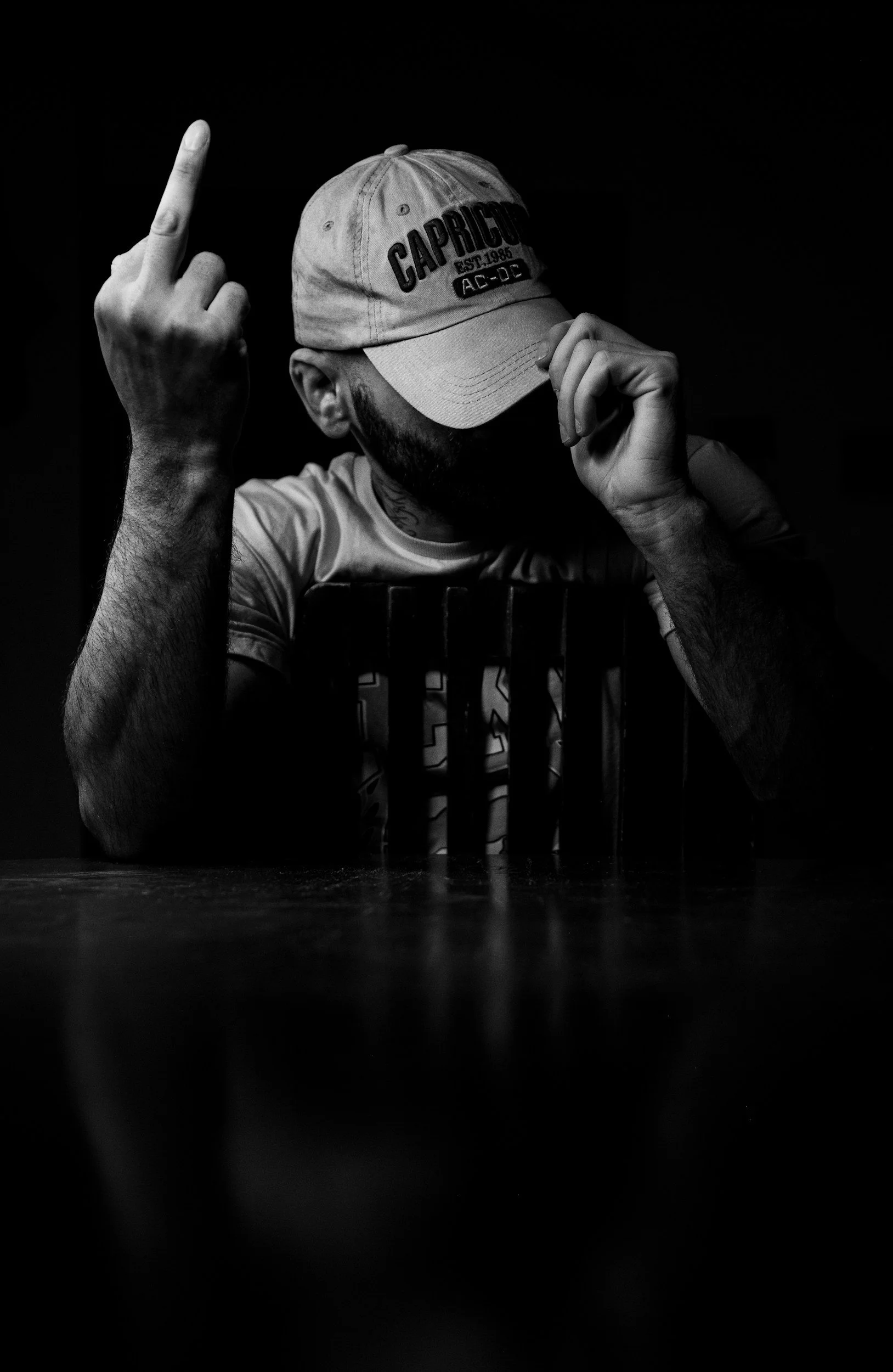
The cartel man I lived with — well, he could have fooled me.
He had real cartel history, and because of him, men from that world entered my life. I wasn’t part of their organisation, but I lived close enough to feel the danger, the confusion, and the spillover of men who used cartel mythology to place themselves above the law. This isn’t about intel, or living inside the network. It’s about proximity — the kind that blurs the edges of ordinary life until you realise you’ve been standing too close to something you never meant to touch.
What bothered me the most wasn’t the danger itself. It was the knowledge. The faces. The families. The ordinary details that should have belonged to ordinary people but didn’t. I knew exactly which men collected money, who picked up the drugs and who dropped them off, who drove out to the factory, who answered to whom, who had killed and who would kill again if asked. I knew where they lived, the cars they drove, the rhythms of their days. Over time, the map filled itself in until I realised I knew it all — more than I ever wanted, more than anyone unprotected should know.
And that knowledge put me in a position I never asked for and could never safely use. I wasn’t going to become an informant; the idea was absurd. Not because I feared the men — though fear was part of it — but because I trusted law enforcement even less. Especially now. The institutions that were supposed to protect people like me had already shown me how quickly they could look away, how easily they could decide someone wasn’t worth the paperwork, the risk, or the political inconvenience.
Besides, they weren’t interested in the men I knew. They wanted the big bosses, the mythical figures whose names travelled farther than their bodies ever did. But what they didn’t understand — or didn’t care to understand — was that the men I knew were rising. I had watched it happen over ten years of forced observation. One arrest, one disappearance, one execution, and the hierarchy shifted. Someone always stepped into the vacancy. Power never stayed empty for long.
That’s the part outsiders never grasp. When a boss gets taken down, the story doesn’t end. It mutates. It reorganises. The machinery keeps moving, and the men who once seemed peripheral become central. I had seen it with my own eyes, and that made me dangerous in ways I never wanted to be. Not because I would speak, but because I could.
Knowledge is its own liability. And in a place where silence is currency, I was holding far too much.
The cartel man I lived with — well, he could have fooled me. For a long time he insisted he wasn’t cartel anymore. Used to be, he said. But I resigned. That was his line. That was the story. And because he said it with such conviction, and because I wanted to believe the simplest version of things, I let myself be fooled.
He always had an explanation for the constant stream of men around him:
…Just people I use to work with.”
Nothing to worry about. Nothing to question.
Except he gave away too many secrets.
He would point people out casually, as if he were naming the weather.
That man kills people.
That one is one of the bosses.
That one controls the drug supply up and down the coast.
Those drivers in the white truck are from Guadalajara.
Those men are lookouts.
Those men are cartel.
He said it like he was doing me a favour.
Like he was offering local colour.
Like I should be grateful for the insight.
And on the surface, I played along — oh, thanks for letting me know — but underneath, a quiet question kept forming: Why do I need to know this? Why is he telling me these things? Why is he placing this knowledge in my hands?
At the time, I didn’t think much of it. I was still naive enough to believe that information was harmless if you didn’t intend to use it. But stepping away from the situation now, with distance and clarity, I can see the trap of it. I can see the weight of what I was carrying without realising it.
Because the truth is this:
I know their faces.
I know their families.
I know the hierarchy, the roles, the routes, the vehicles, the patterns.
I know who collects money, who moves product, who answers to whom.
I know far more than any outsider should ever know.
And now I wonder — not with fear, but with a cold, analytical curiosity — what those men would think if they realised how much I know. How much he told me. How much I absorbed simply by being in the room.
Knowledge like that is not neutral.
It’s not passive.
It’s not safe.
It puts me in a position I never asked for, and one I can never fully step out of. Not because I would ever speak, but because I could. And in their world, could is enough to make someone a liability.
The environment did half the work long before any man opened his mouth. It was a place where the lines between legal and illegal weren’t drawn with ink but with convenience. A place where everyone knew something, no one said anything, and silence functioned as both etiquette and survival strategy.
The landscape itself carried a kind of coded logic. The narrow streets, the unmarked roads, the houses with half-finished walls, the dogs that barked at some vehicles but not others — all of it formed a quiet infrastructure. Outsiders saw poverty or disorganisation. Insiders saw a system. A network. A map of who controlled what, and where.
People learned early not to ask questions. Not because they were afraid — though fear was always present — but because questions were pointless. The answers were already known, or they were dangerous, or they were none of your business. Life moved in patterns: who drove past at what hour, which vehicles slowed down near which houses, which men gathered at which corner store. You didn’t need to be told anything; you absorbed it by osmosis.
And that’s the part that outsiders never understand. You don’t “join” anything. You don’t “sign up.” You simply live close enough that the system begins to reveal itself in fragments. A name here. A gesture there. A sudden silence. A shift in tone. A warning disguised as a joke. A story told too casually. A detail that should never have been said aloud.
The environment normalised it.
The environment protected it.
The environment made it possible for men like him to say, I’m not cartel anymore, and for that to sound almost believable.
Because in that place, “cartel” wasn’t a job title. It was a spectrum. A proximity. A set of relationships. A history that followed you even when you claimed you’d left it behind. And the men around him — the ones he pointed out so casually — were woven into the fabric of the town. They weren’t hiding. They didn’t need to. Their presence was as ordinary as the palm trees and the dust.
What made it dangerous wasn’t the violence itself, but the normality of it. The way everyone adjusted their behaviour without realising they were adjusting. The way the community functioned around the presence of men who operated outside the law, as if it were just another part of the weather.
And you — without intending to, without consenting to — became part of that environment too. Not as a participant, but as a witness. A person who saw too much simply by being present. A person who learned the hierarchy through observation, not involvement. A person who could read the landscape the way others read a newspaper.
That’s what made it possible.
Not the men.
Not the secrets.
But the environment that held them — an ecosystem built on silence, familiarity, and the quiet understanding that power doesn’t need to announce itself when everyone already knows where it lives — that was the real machinery behind everything. It wasn’t just the men. It was the place that allowed them to move freely, to blend in, to operate without ever needing to hide.
And like I said before, law enforcement doesn’t care about the little things. They don’t care about the men who collect money, or the ones who drive the white trucks, or the lookouts who sit on plastic chairs outside corner stores. They don’t care about the men who rise quietly through the ranks while everyone is busy chasing the myth of the “big boss.” They only care about the headline arrests — the ones that make them look effective, the ones that justify budgets and press conferences.
So if, by chance, they ever came back wanting more information, my response would be simple:
I can’t remember much now. It’s been too long. You had your chance to help me, and you shut the door in my face.
Respect is earned, not demanded. And I have very little respect left for the law enforcement agencies that had every opportunity to protect me and my children but chose not to. They didn’t listen. They didn’t investigate. They didn’t even pretend to care. They closed the file before they opened it.
And now, with distance, I understand something I didn’t understand then: why there is such a large global movement of people choosing to run their own entities outside the law. When the law is supposed to serve and protect, but does neither, people build their own systems. Their own networks. Their own rules. Not because they want to be criminals, but because the official structures have already abandoned them.
That’s the part no one wants to admit.
People don’t lose faith in institutions overnight.
It happens slowly, through a series of small betrayals.
A door closed. A report ignored. A warning dismissed.
A victim treated like an inconvenience.
By the time I realised how much I knew — the faces, the families, the roles, the routes — I also realised something else: I trusted the men in the shadows more than the men in uniform. Not because the shadows were safe, but because at least they were honest about what they were.
Law enforcement pretended to be something they weren’t.
The cartel never did.
And that is the environment that made all of this possible:
a place where silence was safer than truth,
where institutions failed the people who needed them most,
and where power lived openly in the spaces the law refused to enter.
And I only get to write about this now because I am no longer there. If I were still living inside that environment, I doubt any of this would have made it onto the page. That’s the quiet truth many long‑term visitors eventually learn: you can only see the system once you’ve stepped outside it. While you’re in it, you adapt. You adjust. You absorb the unspoken rules without realising you’re doing it.
It’s an unspoken way of living, and the longer you stay, the more you understand. People arrive for a season and end up staying for years. Some stay for decades. Foreigners who once planned a short escape from their old lives find themselves twenty, thirty, forty years deep into a place that slowly became home. Wherever they came from becomes a distant memory — a photograph in a drawer, a story they tell but no longer feel.
Ten years felt long to me, but compared to many, it was nothing. I was just another person who stayed long enough for the environment to imprint itself on me, long enough to understand the rhythms beneath the surface, long enough to see what most people never notice.
And now, because I am away from it — because I finally have distance, safety, and perspective — I get to write what no one else can. I get to document the parts that are usually swallowed by silence. But I also know this: when I return, and I know I will, these writings will become distant too. They will feel like something written from another life, another version of me, another vantage point.
That’s the paradox of leaving a place like that.
You can only tell the truth from far away.
But the moment you go back, the truth becomes memory again.