Chapter 33. Coercion Without Fingerprints
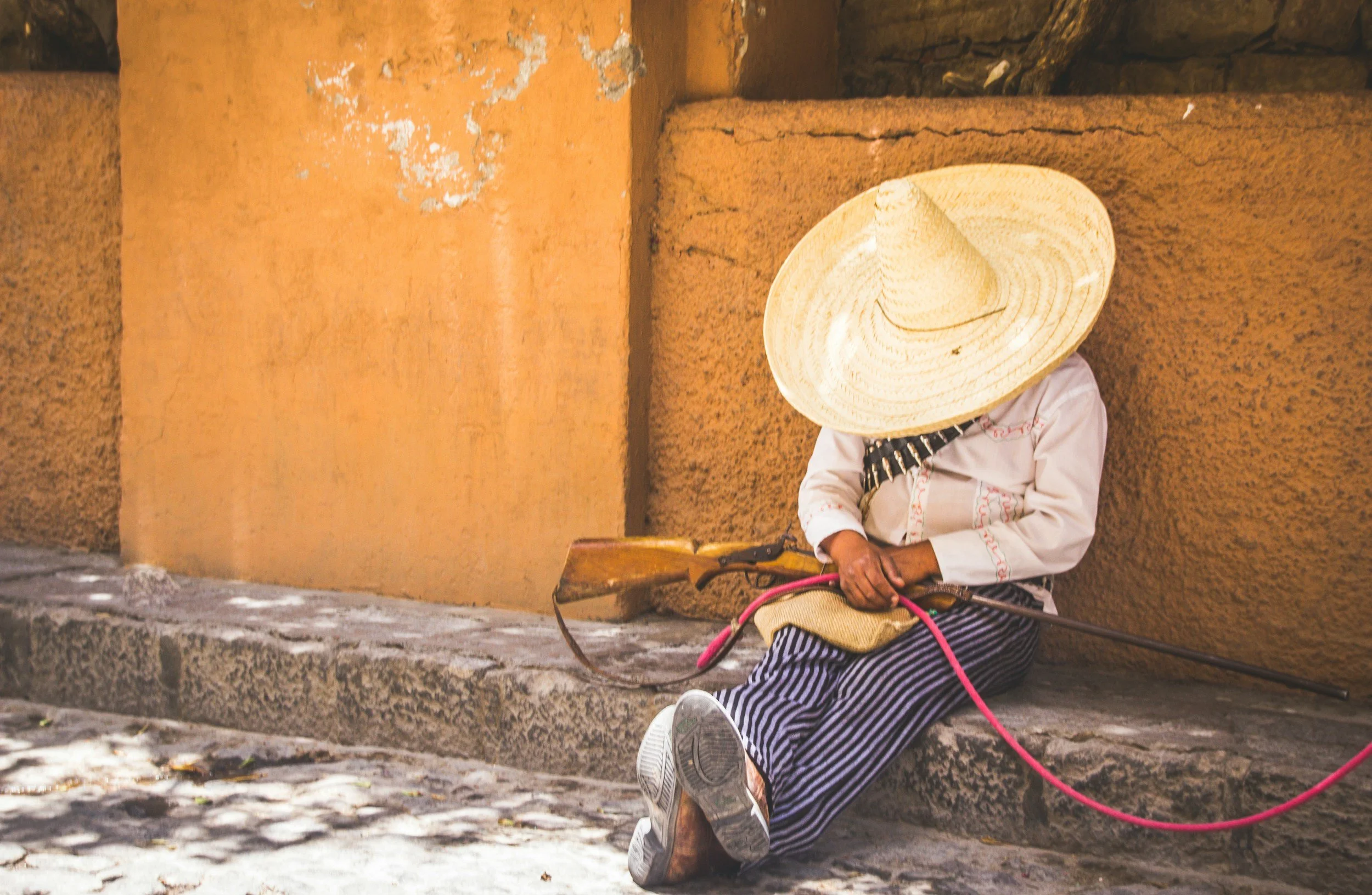
He was a dangerous man — so dangerous that I have been terrified to even write about it until now.
For years I tried to understand the split‑screen reality I was living in: the good man who stood beside me, and the bad man who walked away. One protected my children when their father abandoned them; the other abandoned them in the first place. The contrast was so stark it felt almost mythic, as if I were watching two archetypes act out their roles on the same stage. But real life is never that clean. People are not symbols. People are systems — shaped, fractured, and sometimes distorted by the worlds that built them.
When my ex-husband left Mexico for what he claimed would be six months, he asked José Antonio De la Torre Hernández to look after his wife and four children. It was the last responsible act he ever performed as a father. He never came back. José did what honourable men do: he stepped in. Not to replace anyone, not to claim a role, but to ensure four children were safe in a country where safety was never guaranteed. He did the most human thing a man can do — he showed up.
But nothing is ever as simple as the version we want to believe. The man who stood by my ex-husband and honoured his wishes was not just a loyal friend; he was also someone shaped by twenty‑four years in maximum‑security American prisons. Those places are not rehabilitation centres. They are psychological battlegrounds where survival depends on reading people faster than they can read you, on mastering manipulation, on learning how to weaponize charm, silence, vulnerability, or intimidation. He spent nearly a quarter of a century perfecting a predatory toolkit — not because he was born dangerous, but because the environment demanded it.
And this created a dangerous man — so dangerous that I have been terrified to even write about it until now.
He could mimic honesty, mimic stability, mimic the rhythms of an ordinary life. In psychology, this is called mimesis: the ability to imitate pro‑social behaviour so convincingly that people lower their guard. He could present himself as an honest worker while quietly plotting the next theft. He could speak about his past with such conviction that even the most implausible claims — like flying anywhere in the world without a passport — sounded, for a moment, like they might be true. These were not simple lies. They were grandiose delusions, a defence against the crushing shame of having nothing. When a person’s real identity is too painful to face, the mind builds a fantasy large enough to hide inside.
And he truly believed it. He spoke as if he had the authority to go anywhere, do anything, call in favours from invisible networks. It concerned me that he even implied he had that kind of reach. He made it clear that if I went to Australia, he would find me. For a long time, I believed him. That was the power of his conviction — the way he carried his stories as if they were fact. It took time, distance, and clarity to realise he had no connections at all. He was not a man with influence; he was simply a man who thought he was special because he had done time, mistaking fear for respect and fantasy for power.
And somewhere along the way I finally realised he was never going to change. He was a pathological liar, walking down the street in his blue baggy Levi’s, Puma sneakers, shirtless as always, still performing the same persona he had built decades earlier. It was as if he believed he was still living the gangster life, frozen in time, unable to see that he was nearly sixty years old and running out of time to grow up. His identity had calcified around the only version of himself he had ever known — the prison version, the street version — and he had no idea how to be anything else. He was arrested development made visible, a man permanently stuck in the mythology of who he thought he was.
And recognising that was the turning point. Once you see a man frozen in time, you stop expecting him to meet you in the present. You stop waiting for growth that will never come. You stop mistaking chaos for passion and instability for loyalty. His life was a loop he had no intention of breaking, and I had spent years trying to navigate a world he refused to leave. The moment I understood that, something in me finally loosened. I wasn’t responsible for his past, his persona, or the mythology he lived inside. I wasn’t responsible for the boy he never stopped being. I was only responsible for getting myself out before I disappeared into that same arrested place.
This was the trap I walked into without realising it. His frantic attachment, fear of abandonment, and emotional volatility mixed with the cold, instrumental manipulation he learned in prison. When a predator carries the desperate, clinging attachment patterns associated with Borderline Personality Disorder and fuses them with the calculated, controlling tactics of Antisocial Personality Disorder, the result is a psychological chokehold. He moved fast because predators know that speed is disorientation. He formed instant friendships, not out of warmth or connection, but because fast bonding creates fast access — to money, to resources, to people who don’t yet know they’re being used. That isn’t ordinary instability. It is predatory behaviour dressed up as loyalty.
I had to sit with that for a moment — the realisation that what I lived through had a name. A psychological chokehold. Reading about it was like having someone finally translate a language I had been forced to speak without ever understanding. I wasn’t imagining it. I wasn’t exaggerating. I wasn’t “too sensitive.” Holy fuck — that’s what he did to me. Him and his buddies. The whole system of pressure, speed, intimidation, and confusion. And yes, part of me wondered whether any of it counted as a criminal offence. But like I’ve said before, without evidence or follow‑up, men like him walk free. That’s the design. Coercive control leaves no fingerprints. It leaves only the survivor, trying to explain something that was engineered to be invisible.
He bonded with my ex-husband almost instantly. There were knocks at the door: my daughter is sick, can I borrow money for the doctor? It happened more than once. Soon he was borrowing twenty thousand pesos at a time. It had started long before my ex-husband left the country, yet he never recognised the warning signs. I watched the two of them together and could never quite work out who was helping whom — the bad man helping the good man, or the good man helping the bad one. Their roles blurred so easily, as if each was getting something from the other that I couldn’t see. All I knew was that the dynamic between them had already taken root long before I understood the danger I was stepping into.
If he gave you time to think, your logic would have caught up. Instead, he mirrored your values, your fears, your hopes. He made you feel understood. He made himself indispensable. He became the axis your world spun around before you even realised the shift had happened.
Then came the emotional hostage‑taking. When a person like him senses you pulling away, their terror of abandonment ignites into extreme emotional blackmail. I feared what he would do if I walked out the door. Eighteen months is a long time to live in a state of chronic, terrorising stress. My brain was operating under psychological captivity. The fact that it took an outside intervention — people figuring out “another way” to get me out — is proof of how inescapable the trap was. I could not see the exit because he had blocked my view of reality.
I did not stay for eighteen months because I was weak. I stayed because a dangerous, seasoned con artist used high‑level coercion to hold me in place. I was too scared to tell anyone. I didn’t want to raise alarm bells. A dangerous man with dangerous friends in the background — it was my worst nightmare.
The fear came in micro‑doses. He didn’t need to threaten me outright. The stories about prison, gangs, imaginary international power — they were all coded messages. I learned quickly that challenging him would trigger either a flash of aggression or a spiralling emotional collapse. My nervous system adapted. Survival meant keeping the peace. Survival meant keeping him calm. Survival meant silence.
Isolation followed. Not because he locked me away, but because shame did. As he drained my money and destabilised my life, a part of me recognised the danger. But manipulators rely on that recognition. Once you feel ashamed, you hide the truth from the people who love you. Shame becomes the cage. Silence becomes the lock.