A Wife Made Into Camouflage

A marriage of convenience, decades in the making, and the moment it stopped being deniable.
I. The Arrangement
I married in my twenties. For most of the twenty-one years that followed, I described what I was in as a marriage. It was closer to an arrangement. The distinction matters, and I did not understand it until near the end.
The roles were set before we married. He would lead. I would maintain the household. Affection was never discussed as a requirement of the arrangement; structure was. There was no period where we simply got to know each other without the shape of the marriage already built around us. The partnership, from the start, functioned as something to be performed correctly rather than something either of us felt.
II. Duty, Not Desire
Intimacy in the marriage followed the same logic as the rest of the household. It was scheduled. It was executed. It was completed. He referred to it as duty, and used that word without irony, as a description of responsibility fulfilled rather than desire acted on.
There was no negotiation involved. Presence was not part of it — he was there physically and largely absent otherwise. Warmth was not part of it. It was a task assigned to my body, performed on a schedule that had nothing to do with what either of us wanted in a given moment. I mistook this for ordinary married life because I had no comparison to measure it against.
III. The Mission
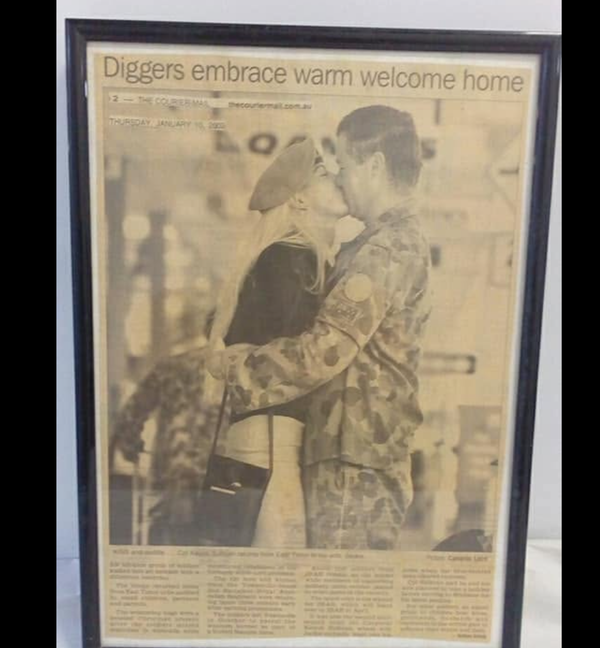
He came to the word "duty" through years of military service. In that framework, discipline and mission focus were not optional traits — they were the traits by which a man's worth was measured. If keeping a wife content counted as part of the mission, then it was carried out with the same seriousness he applied to any other assignment: consistently, without complaint, without particular feeling attached.
To him, this counted as devotion. He never asked whether it counted as devotion to me. The question did not appear to occur to him.
IV. Operation, Not Marriage
The marriage ran like an operation with two assigned roles. He executed responsibilities. I maintained the household. There was no friendship built into that structure, no curiosity from him about what I thought or wanted, no reciprocity in either direction.
I was married and alone most nights, in the specific way that happens when another person is present but not engaged. Loneliness inside a marriage does not always look like solitude from the outside. From the inside, it was constant.
V. Camouflage
Underneath the structure was something I did not have access to at the time: he was using the marriage to conceal his sexual orientation. A wife, a household, a traditional domestic life — these were not incidental facts about the life he built. They served a function. I served a function.
I did not consent to being used as cover, because I was not told that is what I was being used for. The marriage was not simply unhappy. It was constructed, at least in part, to hide something I had no knowledge of.
VI. Discovery
I found out at the very end of his career and our marriage. Two men, two separate occasions, both within the same short span of time. By then we had been together for twenty years. He denied responsibility both times. Both times, there was an account of events that left him blameless, by his own description of what happened.
I no longer accept those accounts. The facts did not require his interpretation of them, and I have stopped supplying it on his behalf.
VII. The Theft
He stole my life. That is not a figure of speech. It is a description of what twenty-one years spent maintaining a structure I did not know was false actually cost — measured in years, not metaphors.
There has been no accountability. He has not acknowledged what the marriage was or what it took from me. There is no closure attached to any of this, and I have stopped expecting one to arrive.
VIII. What's Left
I am 52. It has been nine years since the marriage ended, and I am still putting back together what those twenty-one years took. Whatever years remain, I intend to spend them differently. Not managed. Not performed for. Not used as cover for someone else's concealment.
That is the account, as I lived it. There is no other ending to give it.